Commercial electrical contracting
Commercial electrical contracting across Lebanon, Lancaster and Berks counties: fit outs, remodels, service and panel upgrades, lighting, parking lots and EV charging.
Most lighting quotes are a fixture count and a price. That is not a design, and it is why so many retrofits end up bright over the floor and dim where people work. A warehouse lit to a number on a spec sheet can still have dark aisles. The useful part of this job happens before anything is ordered.
What we do
Commercial electrical contracting across Lebanon, Lancaster and Berks counties: fit outs, remodels, service and panel upgrades, lighting, parking lots and EV charging.
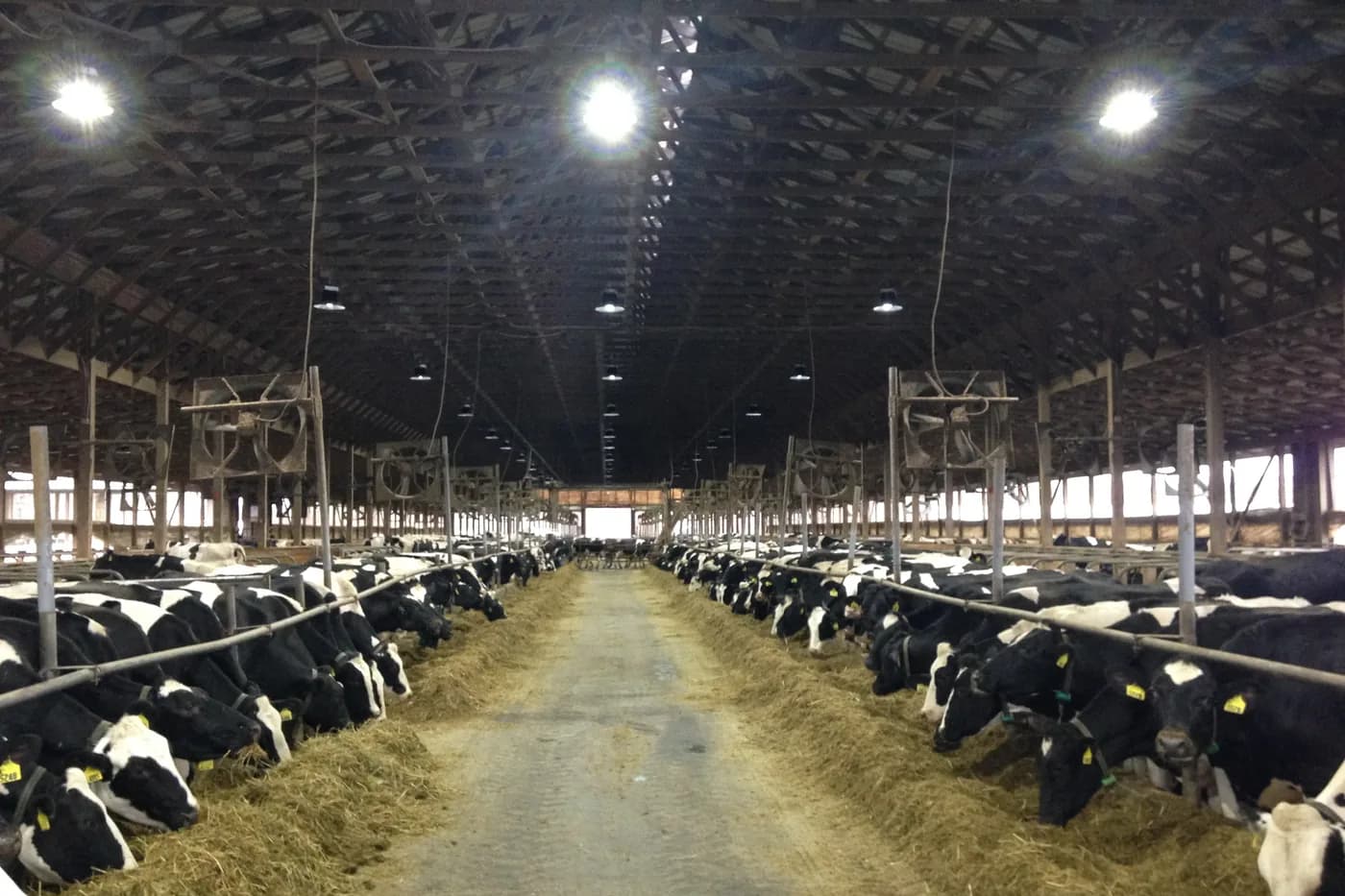
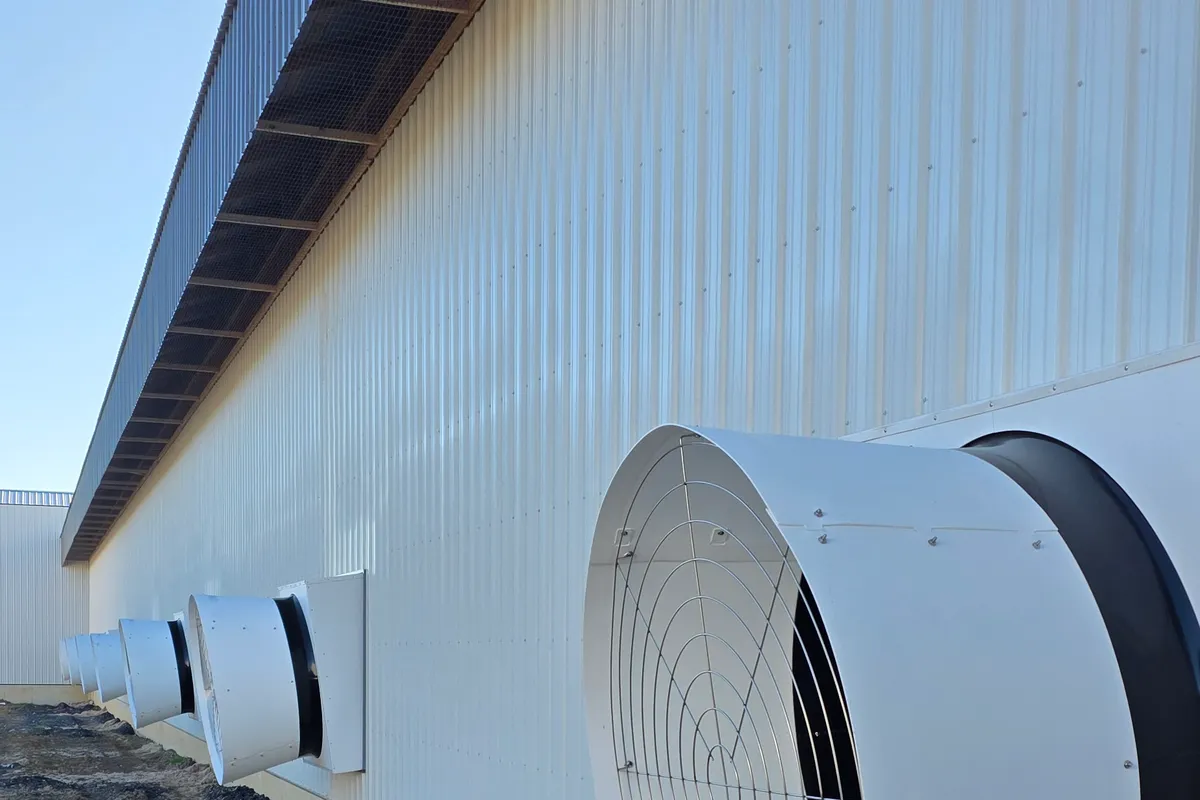
Electrical work for poultry houses, dairy barns and grain systems across Lebanon, Lancaster and Berks counties: ventilation, controls, standby power and farm services.
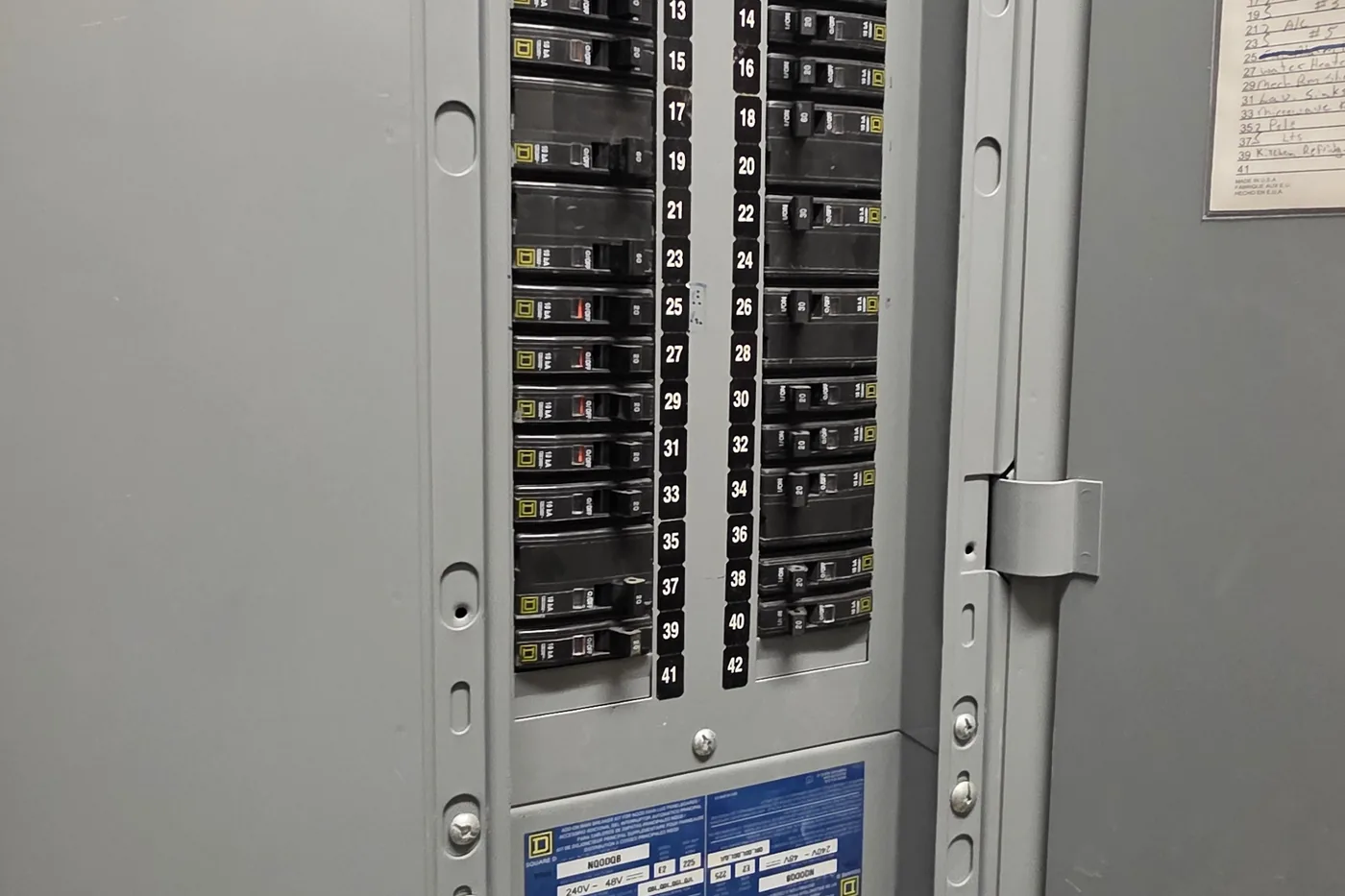
Electrical service and panel upgrades for farms, plants and businesses in Lebanon, Lancaster and Berks counties. Load calculation, utility coordination and a clean changeover.
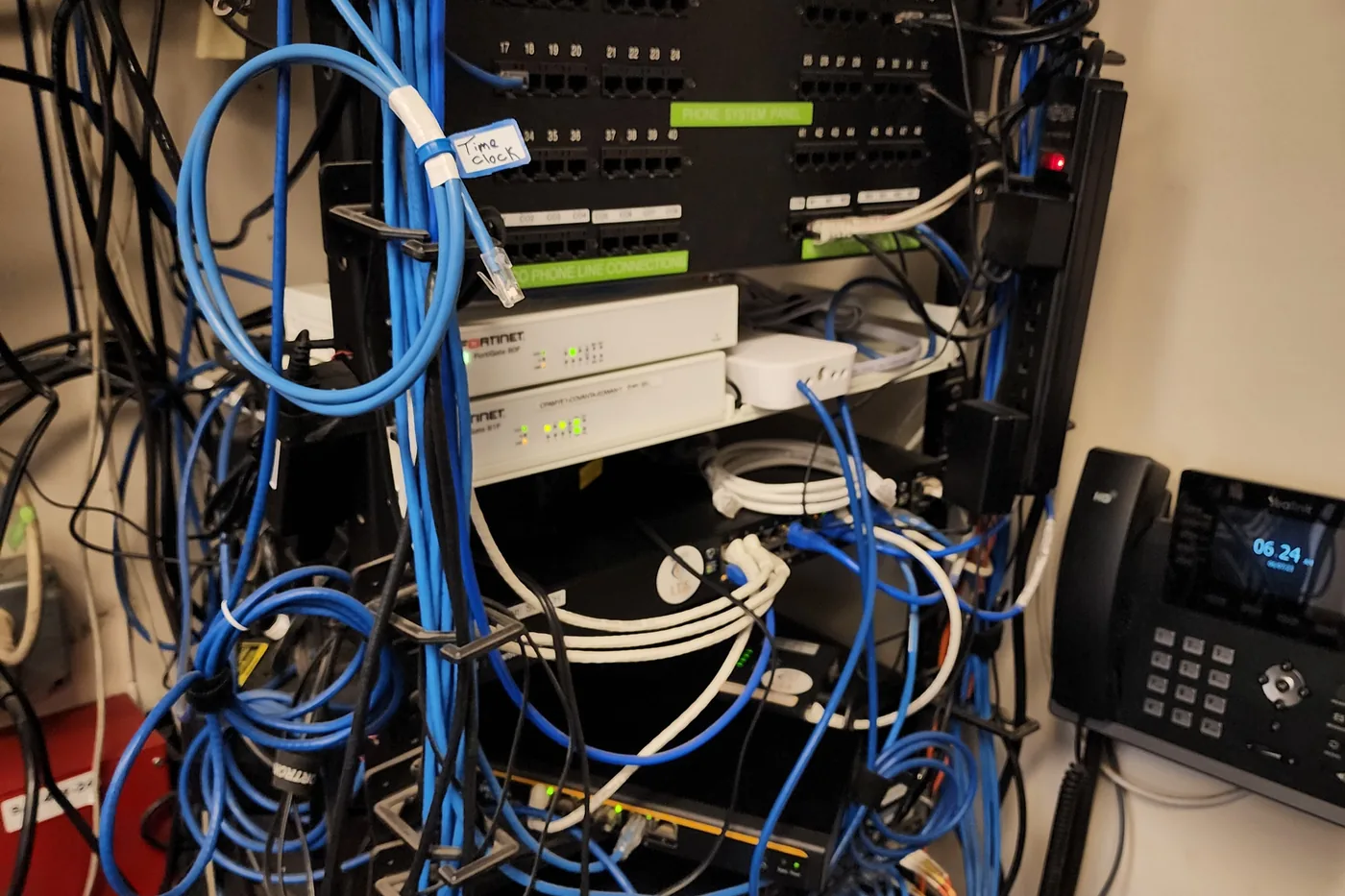
Structured cabling, camera and access control wiring, and controls cabling for plants, offices and farms across Lebanon, Lancaster and Berks counties in Pennsylvania.
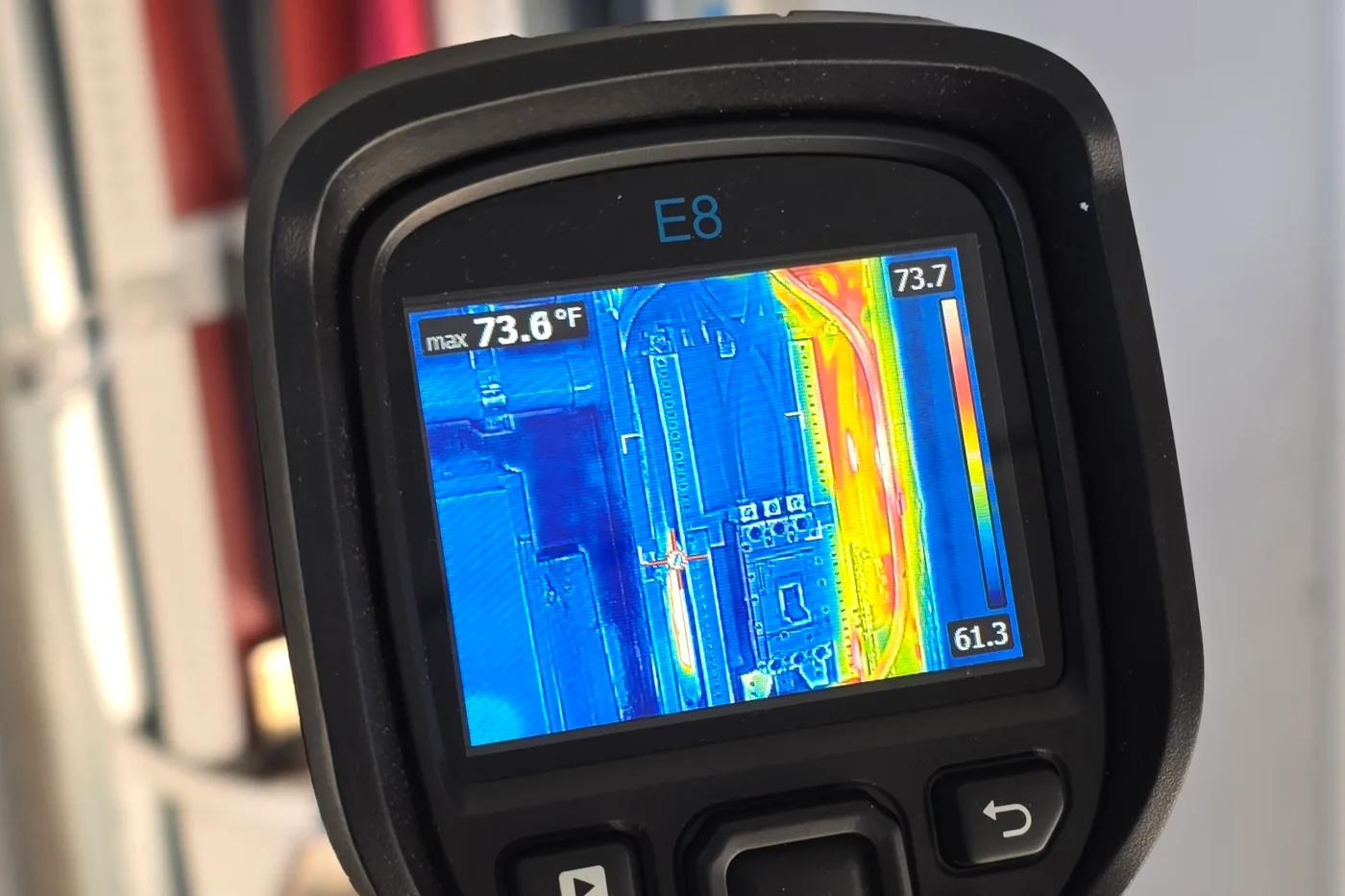
Infrared thermographic surveys, torque and insulation testing, and arc flash studies for plants and farms across Lebanon, Lancaster and Berks counties in Pennsylvania.
What it is
A lumen figure tells you how much light leaves the fixture. It says nothing about where that light lands, and where it lands is the whole job. Two 22,000 lumen high bays hung at the same height, one with a 60 degree optic and one with 120, give you two different buildings. The narrow one puts light down the aisle and onto the rack faces. The wide one washes the floor and the tops of the shelving while the aisles stay dim.
So the order of decisions is mounting height, then spacing, then beam angle, and fixture wattage comes last. A 30 foot deck wants narrower optics on wider spacing. An 18 foot deck with those same fixtures glares and leaves scallops of dark between them. Racking changes it again, because it blocks light from the side, and a layout drawn without the rack positions is a layout for an empty building.
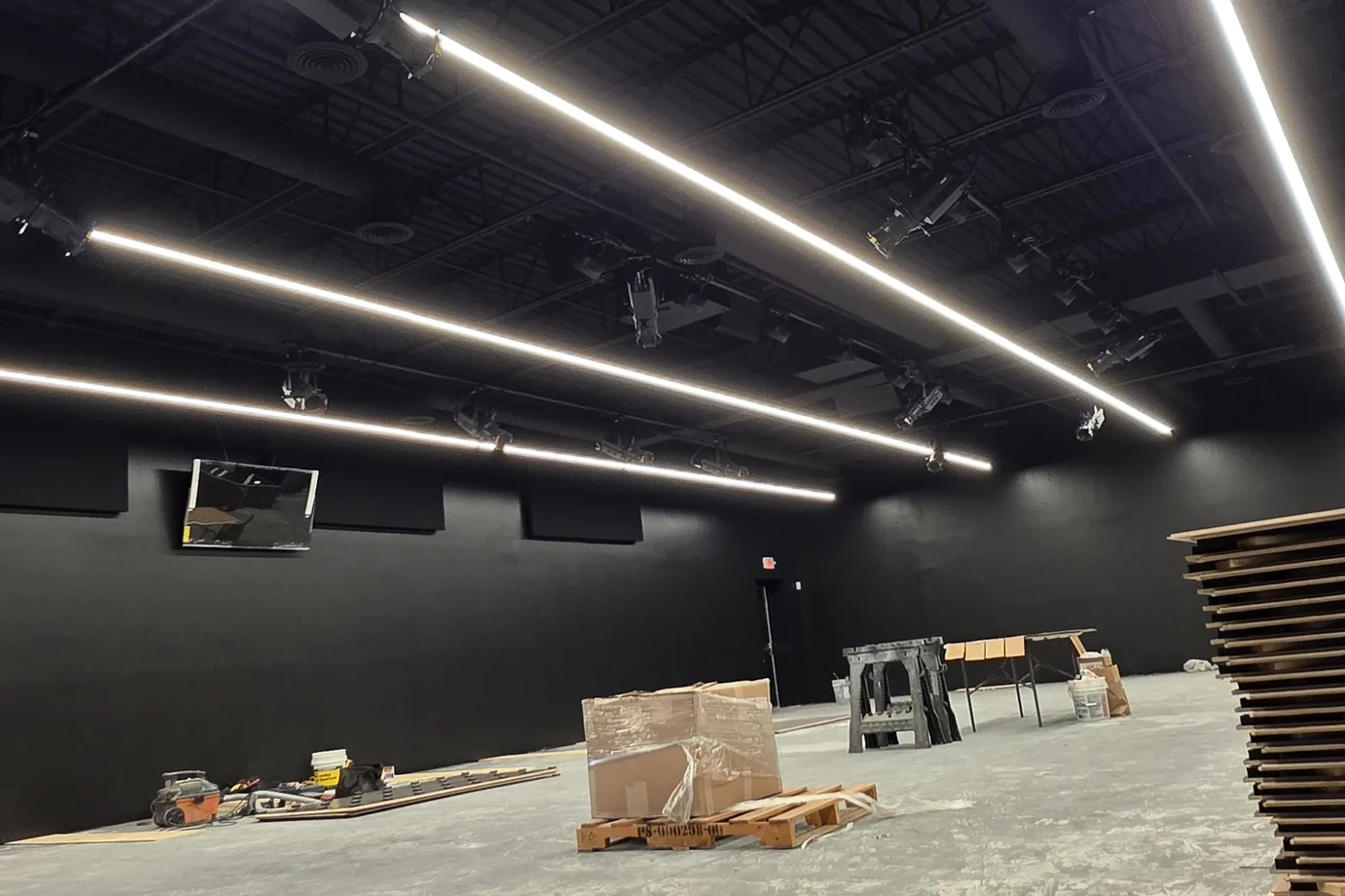
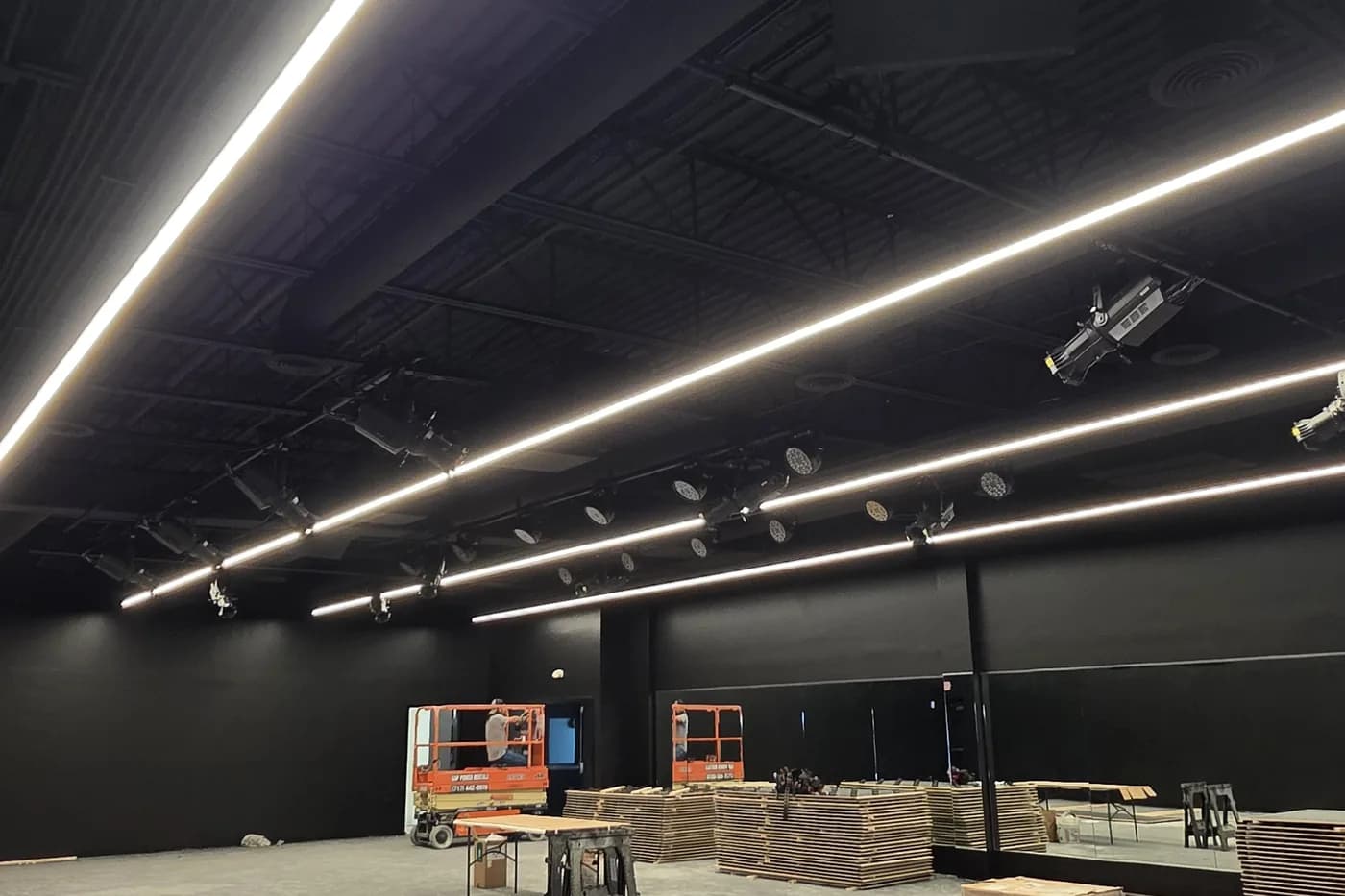
The reasoning is worked through in choosing and spacing high bay fixtures, and what it looks like in a real building is in the warehouse high bay job.
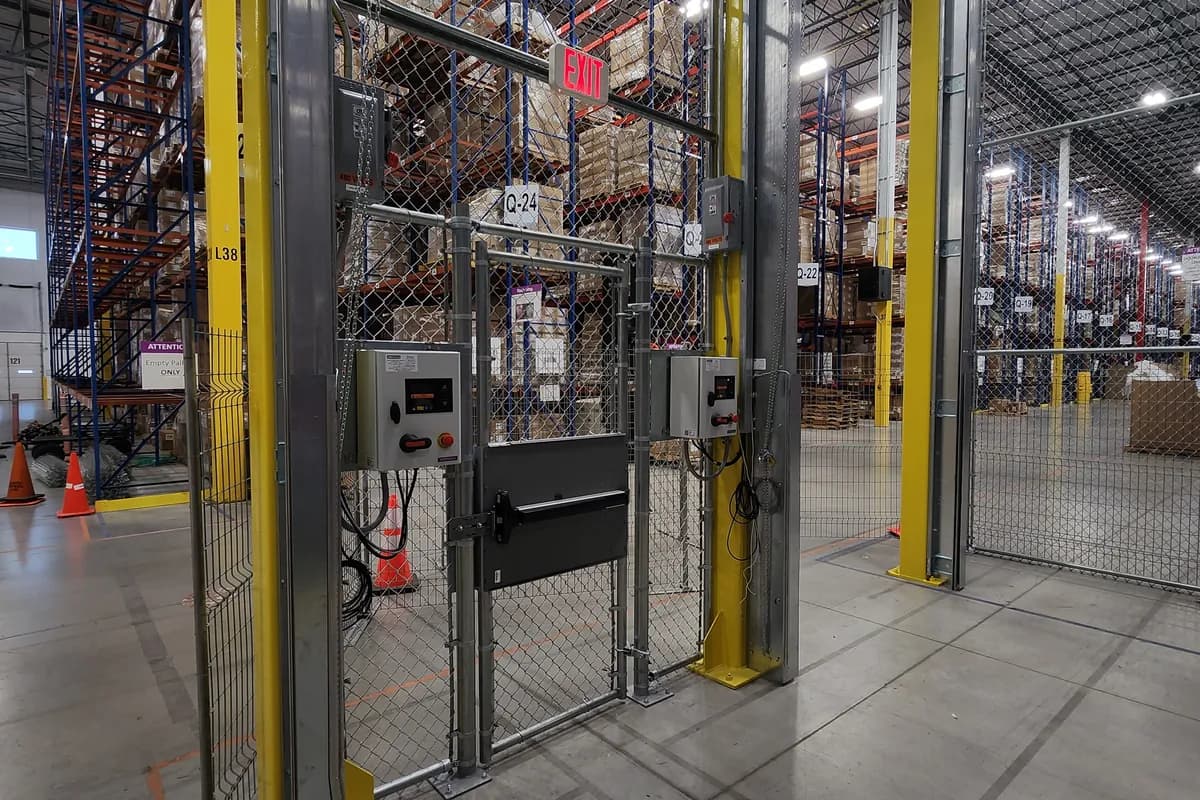
An illuminance target means nothing until you say at what height and on what surface. Bulk storage is usually designed around 10 foot candles at the floor. An aisle where people read labels and pick wants 20 to 30, measured vertically on the rack face rather than flat on the slab. A bench where somebody handles small parts wants 50 or more at about 30 inches.
That is why one fixture type across a whole building is almost always wrong. A packing line, a storage bay and an office corridor are three different problems under one roof. Uniformity also beats average: a room at 30 foot candles with dark patches between fixtures reads worse than an even room at 20.
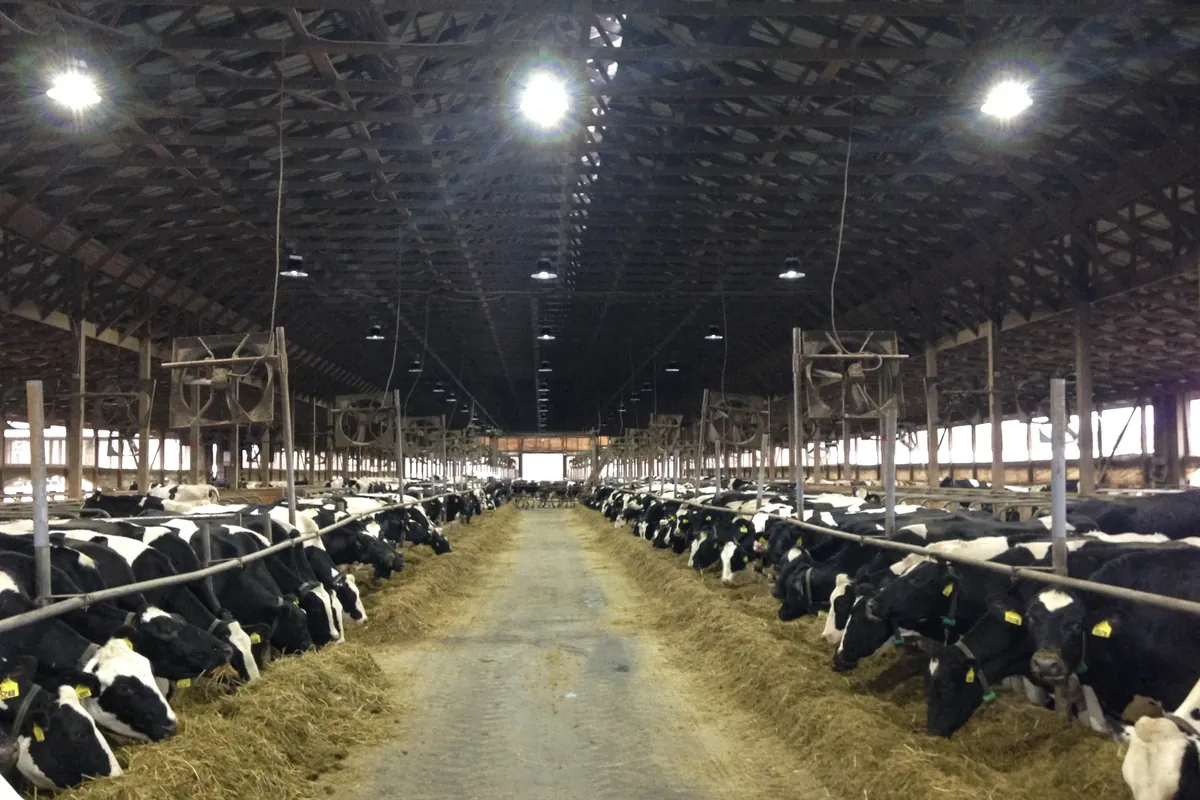
Ammonia is the first reason. In a poultry house or a bedded pack barn it attacks aluminium housings, creeps into the driver compartment and corrodes terminals from the inside. A high bay taken off a general commercial catalogue often lasts two or three years in that air and then starts failing one fixture at a time, which is the expensive way to find out.
Washdown is the second. Article 547 of the National Electrical Code requires luminaires in these buildings to keep out dust and moisture, to be watertight where the space is washed for sanitation, and to be guarded where they can be struck. In practice that means a sealed gasketed fixture with an ingress rating you can point at, not a linear strip with open end caps. The article is covered in plain language in what the code requires in a barn, and the wiring feeding those fixtures in choosing a wiring method for agricultural buildings.
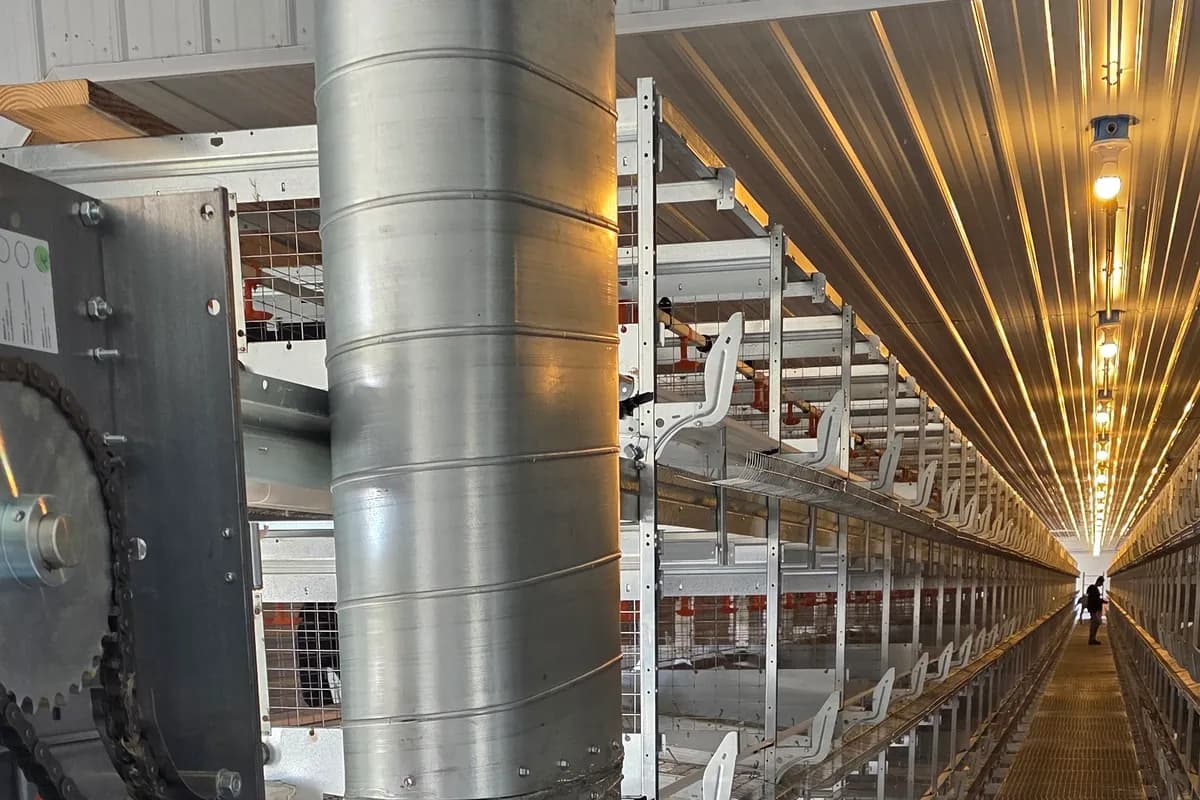
The third difference is control. A broiler lighting program commonly runs 3 to 5 footcandles along the feeders during brood and dims down to a quarter footcandle or less by the end of the flock, which Mississippi State University Extension sets out fixture by fixture, and the dimmer has to be a trailing edge type. A TRIAC dimmer built for an incandescent bulb does not see an LED driver as the resistive load it expects, and the lights flicker or fail outright rather than dim smoothly. Dairy runs the opposite program: long day lighting holds 16 to 18 hours at 15 to 20 footcandles followed by 6 to 8 hours of near darkness, and Michigan State University Extension has documented herds gaining close to 10 percent more milk on that schedule. Both are in the free stall barn lighting job and the poultry house ventilation and power job.
Swapping a 400 watt metal halide high bay, which pulls closer to 460 watts once the ballast is counted, for a 150 watt LED is the headline number. The second saving is often larger across a year, and it gets dropped from the quote because it adds a little to day one.
Warehouse aisles are empty most of the time. ASHRAE 90.1 already requires occupancy sensing in warehouse aisleways that cuts fixture power by at least half, and that requirement exists because the saving is real. Daylight zones under skylights can dim close to off on a bright afternoon. Outside, a photocell and a timeclock together beat a photocell alone, because a yard rarely needs full light at three in the morning.
One warning on retrofits. When connected load drops by two thirds the old lighting circuits end up lightly loaded, and the panel schedule becomes even less accurate than it already was. We correct it on the way out, which sounds like a small thing until somebody has to find a circuit at night, as how to read a panel schedule sets out.
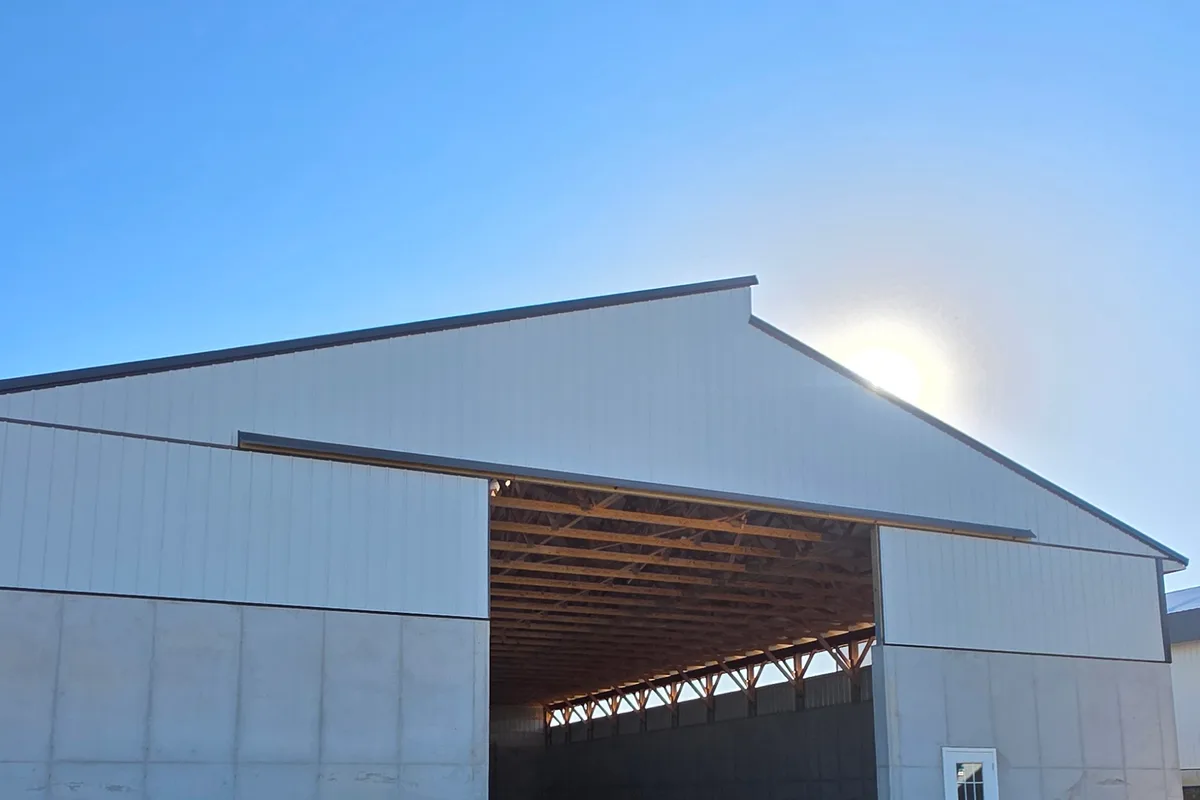
The cost of a high bay is not the fixture. It is the lift, the aisle you clear to get the lift in, and two people working at 28 feet. That is true the first time and every time after, so fixtures should be chosen as though replacing one is expensive, because it is.
LEDs rarely fail the way lamps did. Drivers fail, and they fail early when they run hot or when they were the cheapest part of a cheap fixture. That is the argument for a product with a driver you can still buy in six years and a warranty covering labour, not just a box on a shelf. Where the schedule allows we do the work in blocks during a shutdown, as in plant wiring during a shutdown.
What this covers
If what you need is not on the list, it is still worth asking. This is what we are asked for most, not the limit of what we do.
Big volumes where the aisle matters more than the average.
Fixtures chosen for the air they will live in.
Where light is part of how the space works.
The parts judged in January at five in the afternoon.
The saving most quotes leave on the table.
The part that decides whether the rest works.
Warehouses, distribution and cold storage
Pole buildings, shops and equipment sheds
Free stall barns, poultry and swine housing
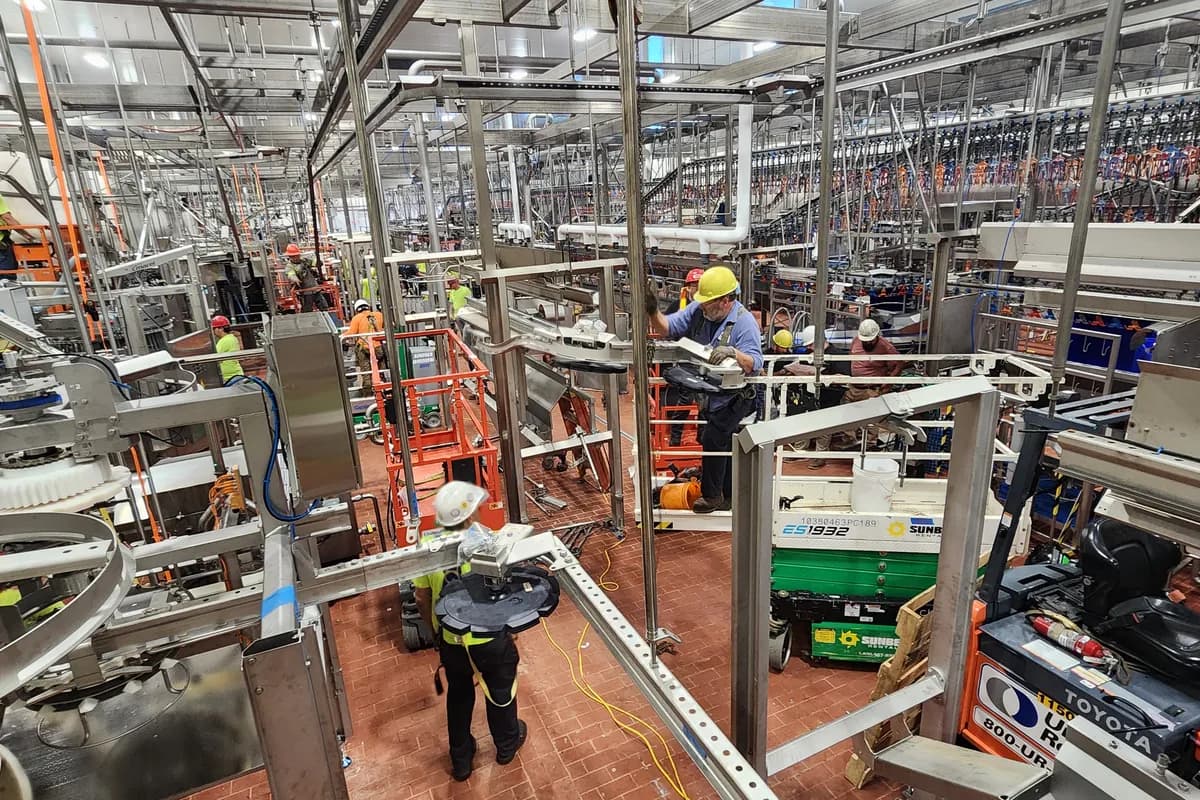
Manufacturing floors and packing lines
Parking lots, yards and loading areas
Offices, retail and showroom fit outs
Grain and feed handling buildings
01
The classic symptom of a layout copied from the old metal halide spacing. It is fixable, and the fix is usually optics and spacing rather than more wattage.
02
Where the fixture has to dim deeply and smoothly without flicker, and the driver has to match what the controller puts out. A dimming curve that steps or flickers is a bird behaviour problem, not just an annoyance.
03
A free stall barn is lit twice: for a long day program and for somebody walking the alley at two in the morning. Those are different levels and often different circuits.
04
Lighting is the easiest load to cut and the easiest saving to under claim. The fixtures are the headline and the controls are usually the larger number across a year.
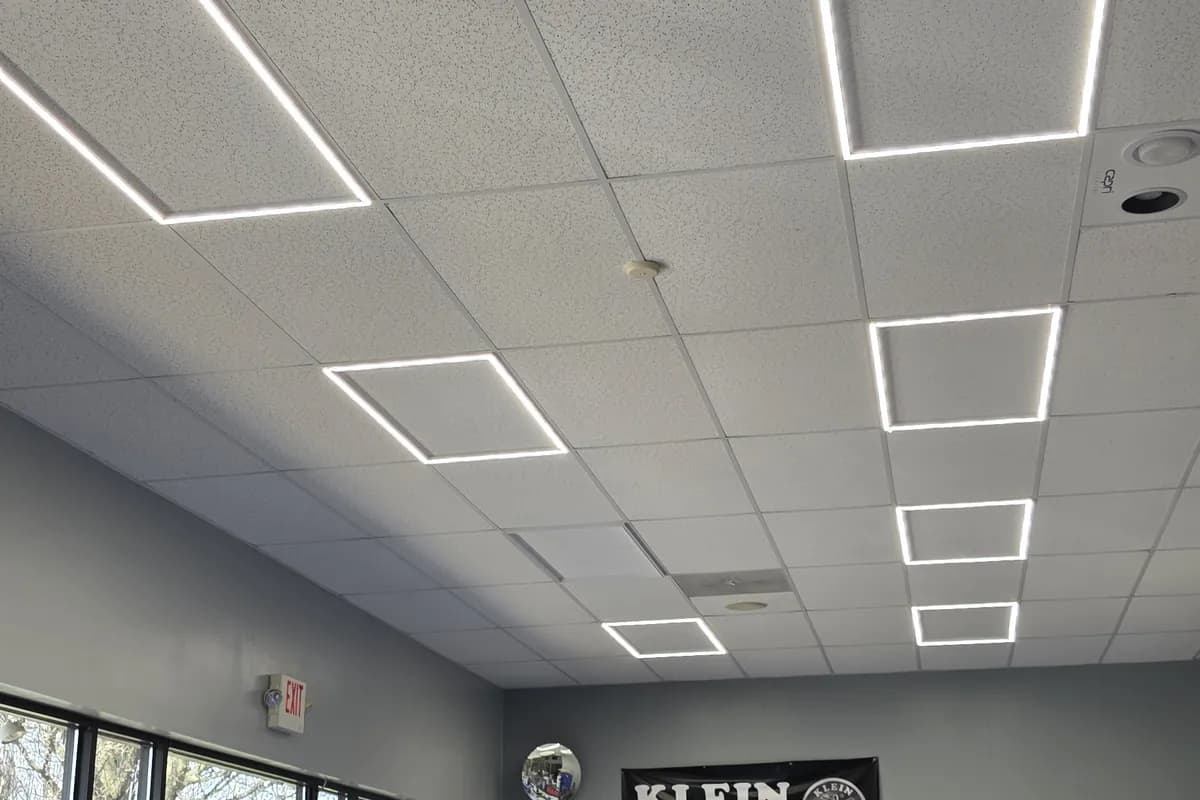
05
Retail, showrooms and restaurants where colour rendering decides whether product looks right. That is a specification question that costs nothing to get correct and a refit to get wrong.
06
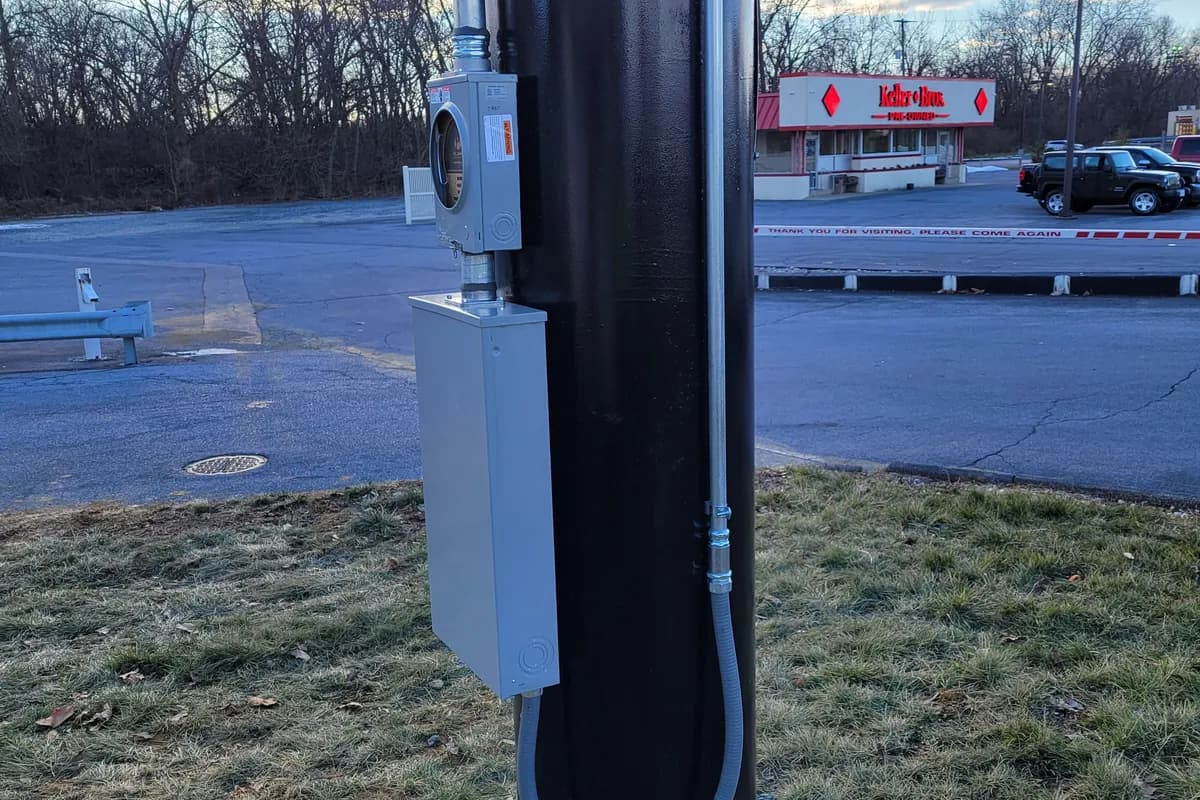
A parking area is a liability question before it is a lighting one, and the poles want trenching before the asphalt gets sealed rather than after.
How a job runs
From the first visit to the labels left in the panel, this is the order it happens in.
A walk through with the lights on, then off, and readings taken at the work plane rather than at the floor.
Mounting heights, rack positions and aisle directions measured.
A layout: fixture, optic, spacing and the foot candle level to expect on the surface that matters.
A look at the existing circuits and panel capacity, since a retrofit frees capacity and a new building has none yet. Background in how distribution is arranged in a building.
A written scope with fixture counts, controls and what stays as it is.
Install, scheduled around production, a zone at a time.
Aiming and commissioning. Sensor sensitivity and time delays get set on site, not left at the default.
Mounting height, spacing, optic and the expected level on the surface that matters, worked out before anything is ordered. A price per fixture is not a design, and it is why so many retrofits disappoint.
Readings taken where people actually read labels and handle parts, often vertically on a rack face rather than flat on the slab. An average over an empty floor is the number that flatters a bad layout.
Ammonia gets into driver compartments and corrodes terminals from the inside. A general commercial high bay in that air commonly fails one unit at a time after two or three years, and replacing them at height is where the money goes.
Occupancy sensing in aisles, daylight zones under skylights, photocell and timeclock together outside. They add a little on day one and are usually the larger saving over a year.
The cost of a high bay is the lift and two people at height, not the box. So the driver has to be one you can still buy in six years, and the warranty should cover labour rather than just the fixture.
A retrofit that drops connected load by two thirds leaves the panel schedule even less accurate than it was. We fix it before we leave, which matters the first night somebody has to find a circuit.
5.0 ★ on Google · Open 24 hours
Read first
Lighting
The warehouse is lit and people still say it is dark. What is wrong?
Agricultural
EMT, PVC or cable in a barn. What actually survives?
Power distribution
Where does the power actually go between the meter and the machine?
Agricultural
What does the code actually require in a barn that it does not require in a shop?
Service and panels
The panel directory says kitchen and there is no kitchen. How do I fix this?
Anatoly runs the crew and usually answers the phone himself. Based in Myerstown, working across Lebanon, Lancaster and Berks counties, open 24 hours.