Industrial electrical services for Pennsylvania plants
Industrial electrical contracting for plants in Lebanon, Lancaster and Berks counties: distribution, machine connection, motor control, drives and shutdown work.
Electrical equipment gives a long warning before it fails, and almost nobody is listening. A connection that will drop a plant in February has been running warm every winter for years. The point of this work is to find those, put a number on them, and fix them while the building is still running.
What we do
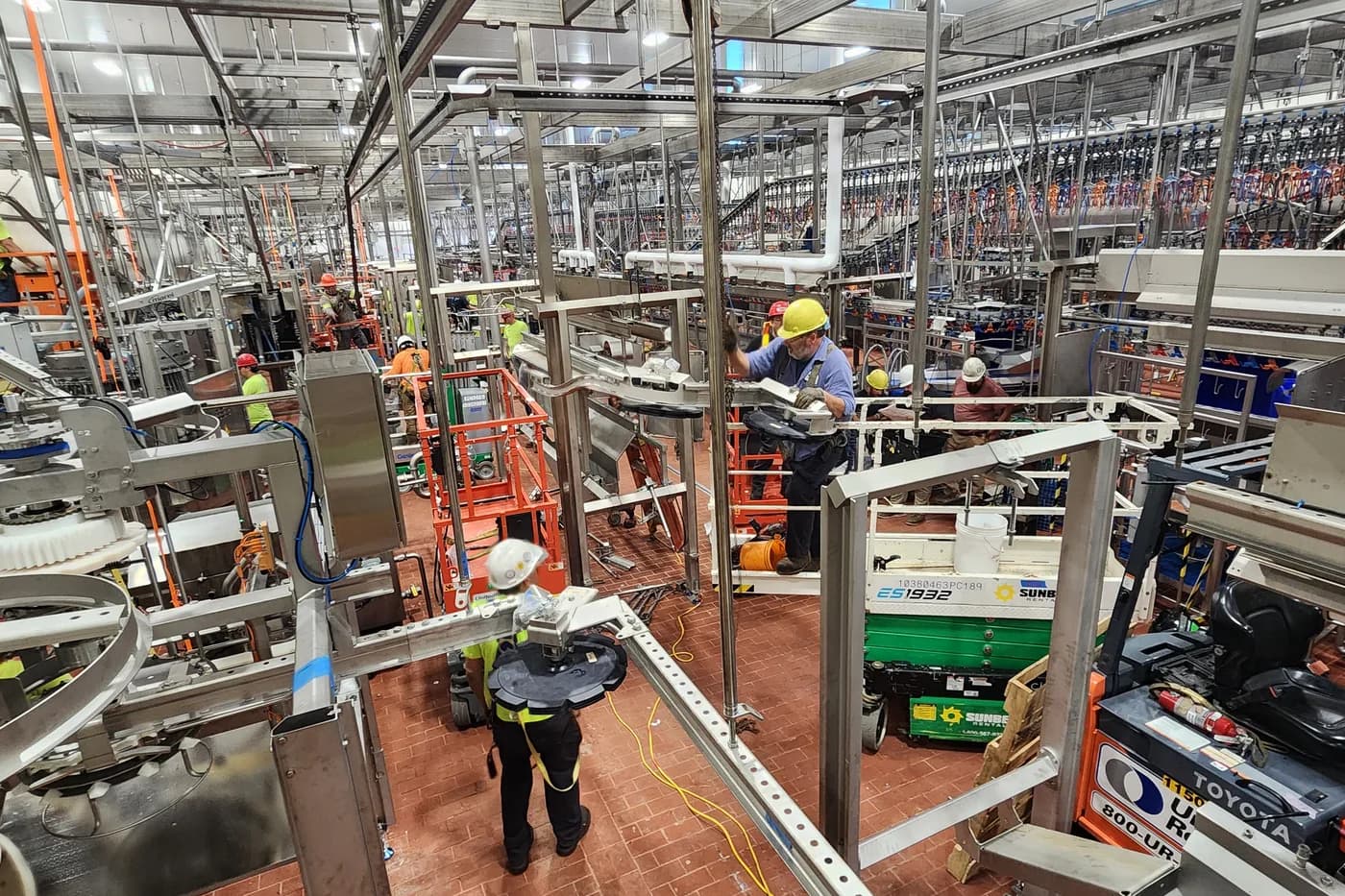
Industrial electrical contracting for plants in Lebanon, Lancaster and Berks counties: distribution, machine connection, motor control, drives and shutdown work.
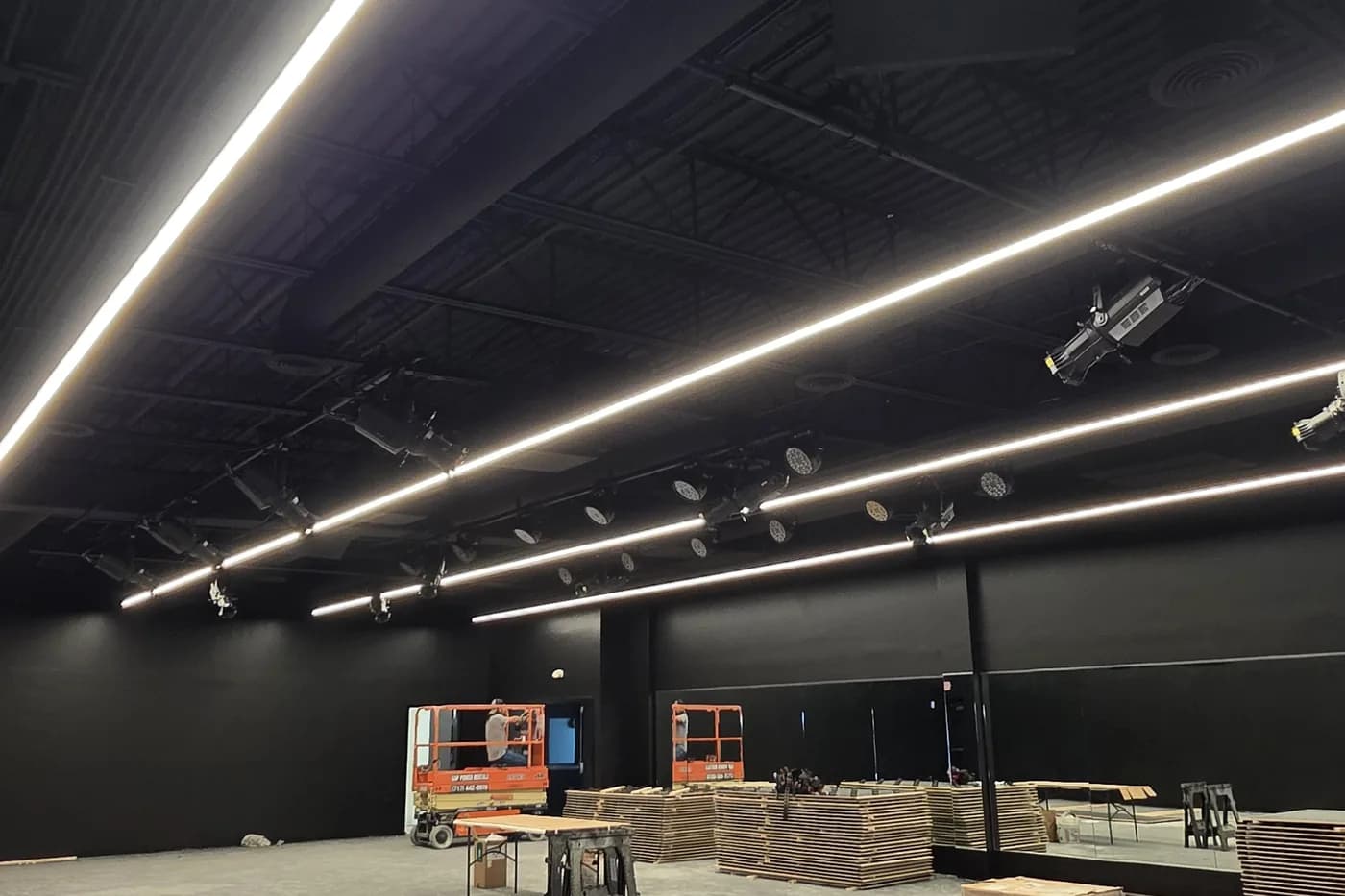
Commercial electrical contracting across Lebanon, Lancaster and Berks counties: fit outs, remodels, service and panel upgrades, lighting, parking lots and EV charging.
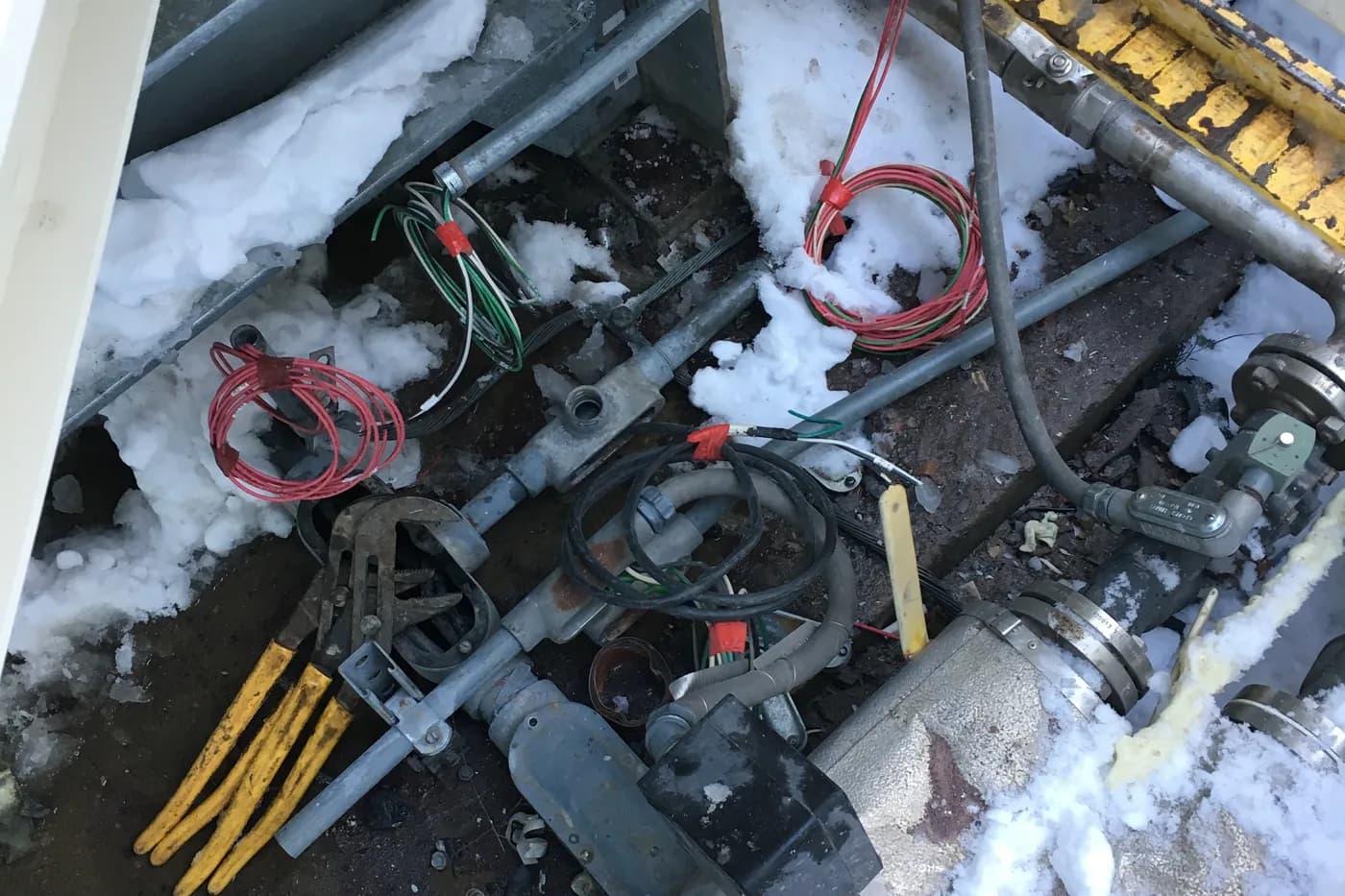
24 hour emergency electrician for farms, plants and businesses in Lebanon, Lancaster and Berks counties. Ventilation failures, lost phases, burned services and storm damage.
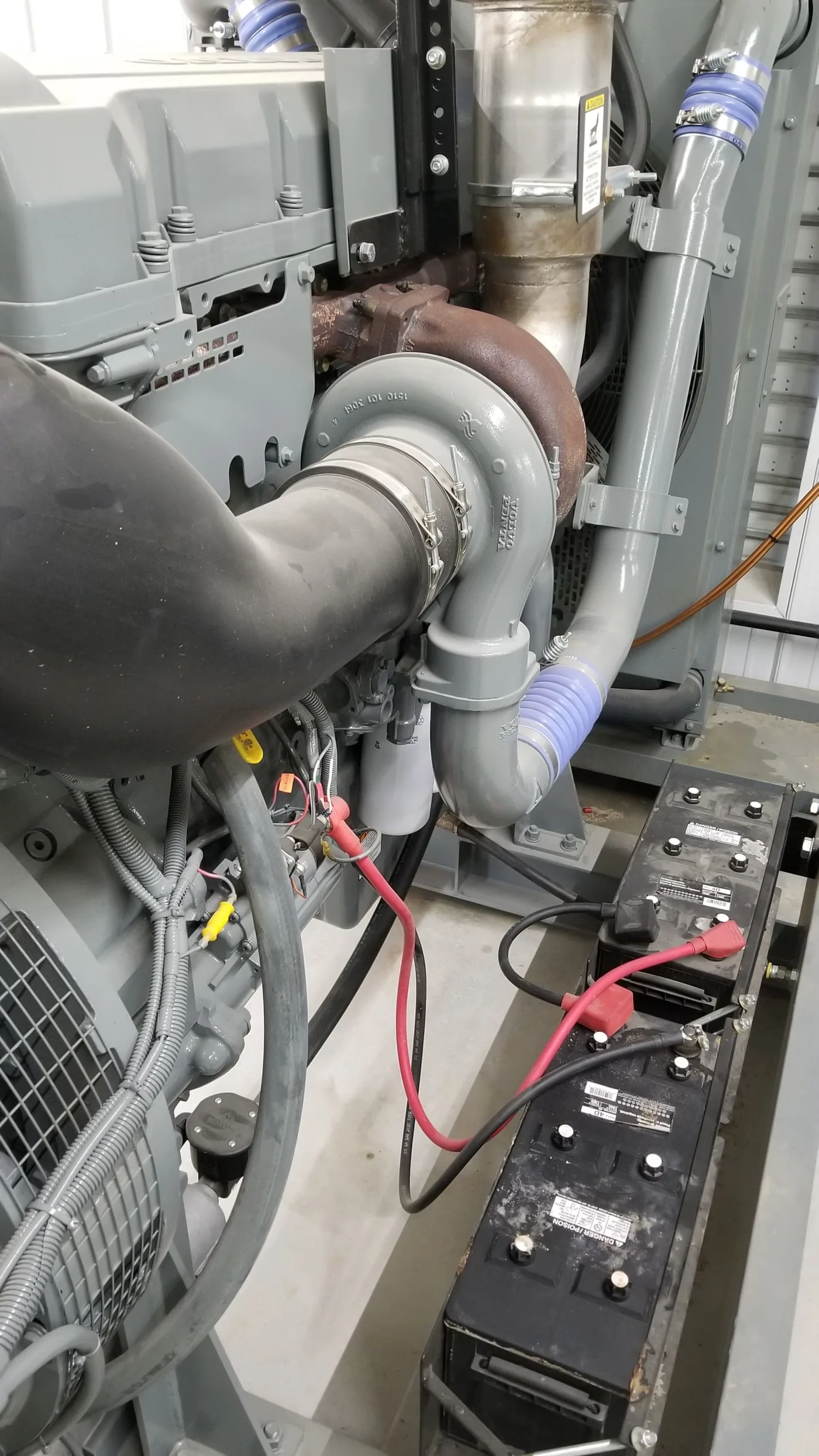
Standby generator installation, transfer switches and generator service for farms, plants and businesses in Lebanon, Lancaster and Berks counties. Sized from a real load list.
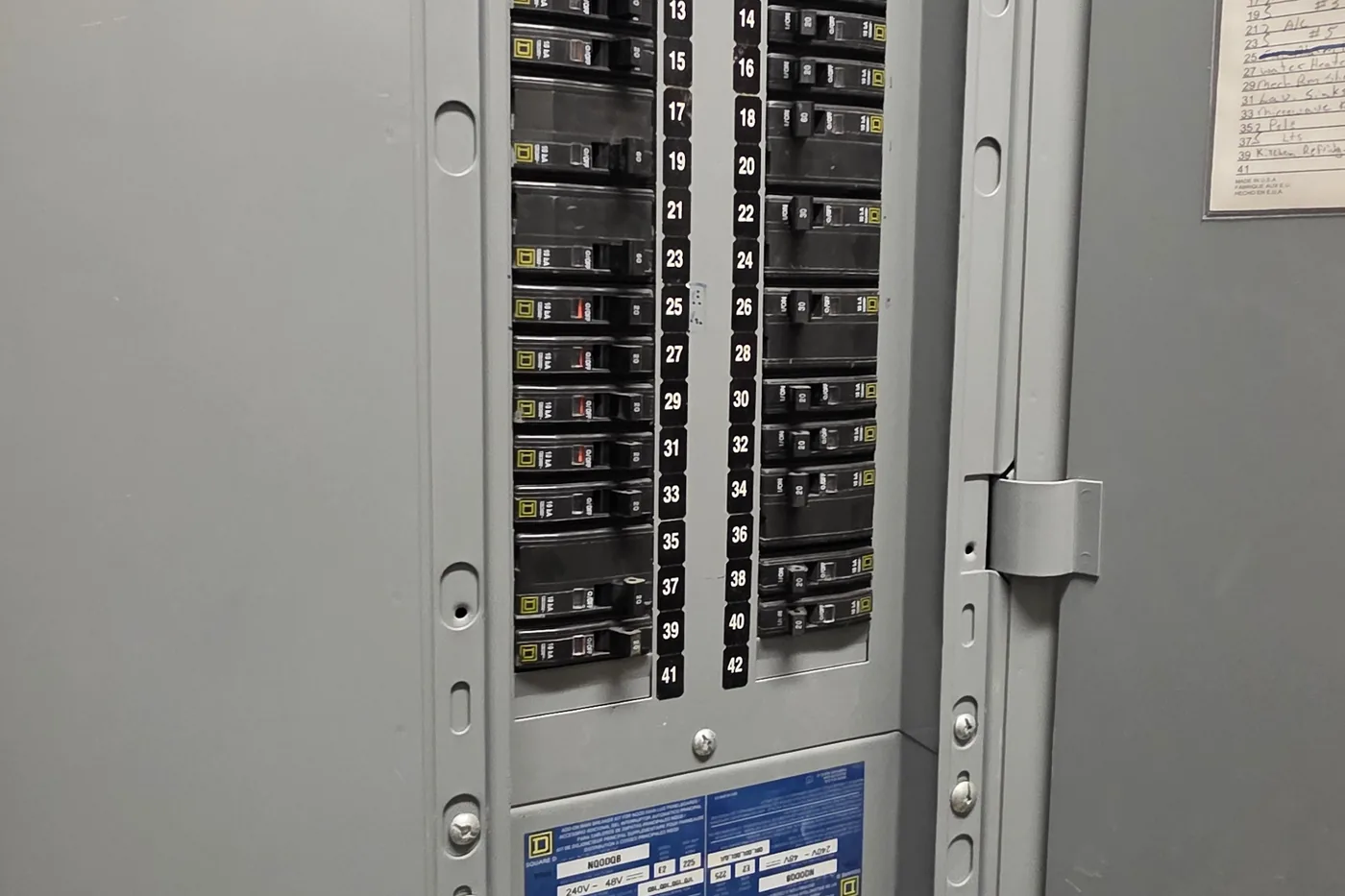
Electrical service and panel upgrades for farms, plants and businesses in Lebanon, Lancaster and Berks counties. Load calculation, utility coordination and a clean changeover.
What it is
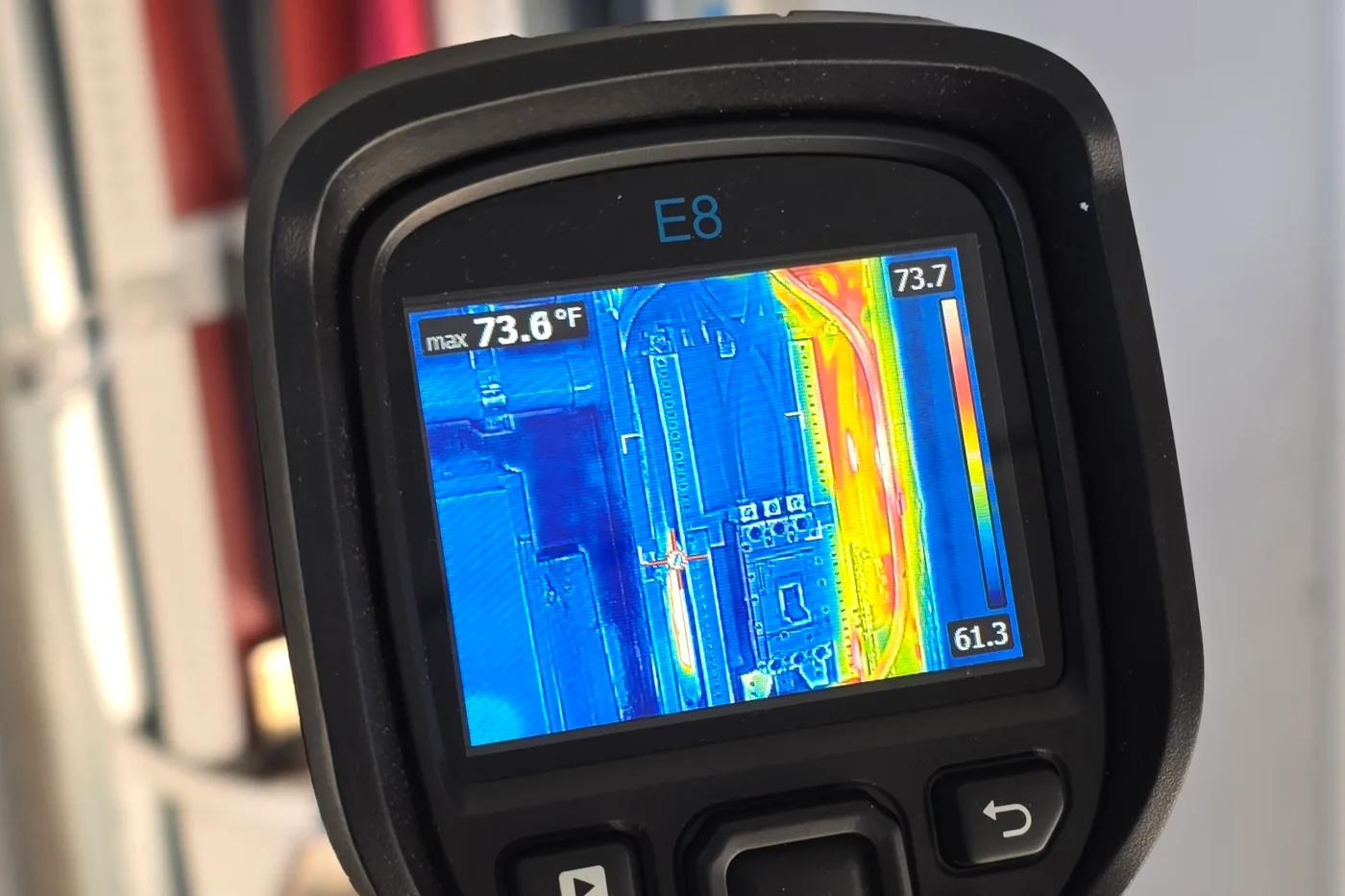
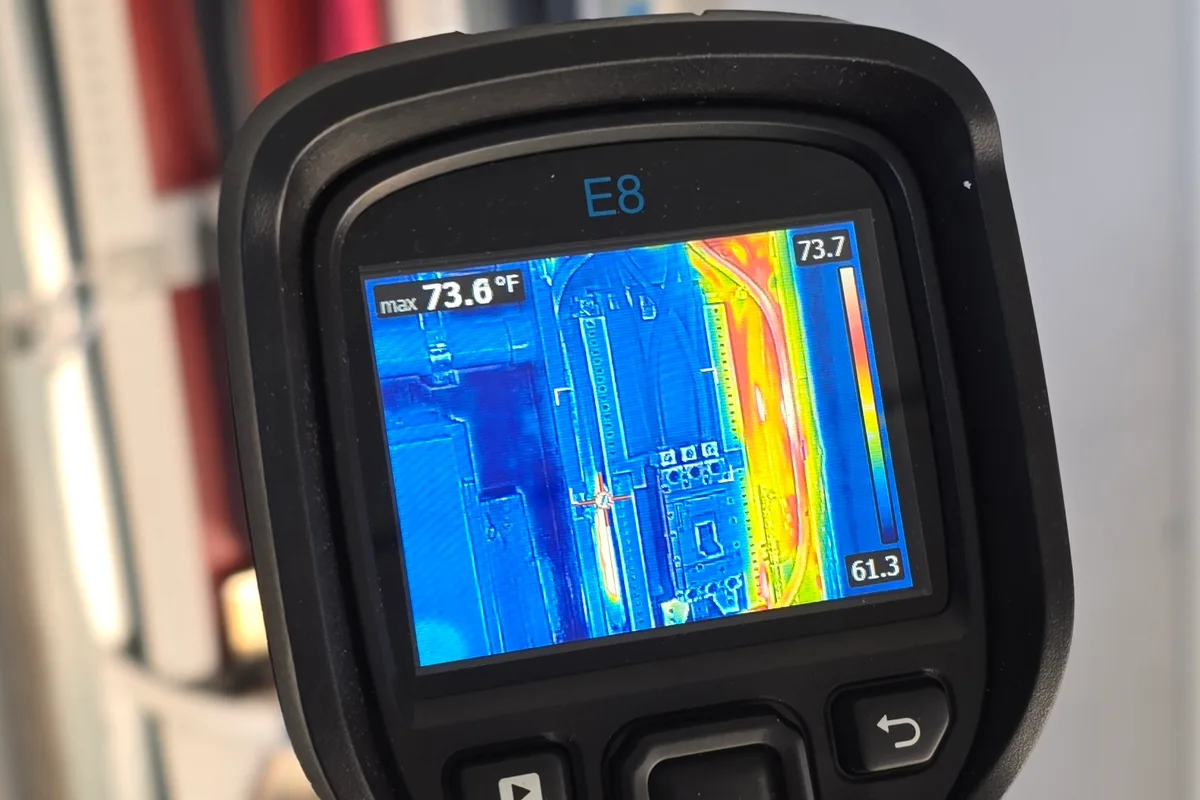
A thermal image of a switchboard at ten percent load is a photograph of a wall. Heat at a bad connection rises with the square of the current, so a joint that will be alarming at full production barely registers when the plant is idle. The equipment wants to be at forty percent of rated load or better before a survey is worth doing, which makes scheduling half the job.
So we survey on a production day, with covers off or through infrared windows, because a closed metal door is opaque to the camera and hides what you came to see. Each image is recorded with the load read at that moment on a clamp meter, since a delta of 20 degrees at half load is a different finding from the same delta at full load.
Findings get graded rather than described. A rise of 1 to 3 degrees Celsius over a matching phase is worth a note. Four to fifteen is a probable fault to schedule. Over fifteen is repaired now. Those thresholds come from the NETA maintenance testing tables, and they are what makes a report actionable instead of a folder of orange pictures. Our infrared survey of a switchboard shows it in practice.
Name the failure and the case for maintenance makes itself. A lug is tightened by hand on a Friday and left slightly loose. Every load cycle warms it and every night cools it, so the conductor creeps under the screw. Contact area shrinks, resistance rises, and higher resistance makes more heat, which accelerates the same process.
Meanwhile the heat is cooking the insulation beside it. The rule of thumb across insulation engineering is that every 10 degrees Celsius above rating roughly halves remaining life, which is why a joint running 40 degrees warm does not fail in a decade, it fails in a few years. Then one cold evening at peak load it opens and takes the phase with it, at the worst possible hour, which is what the winter failure call describes.
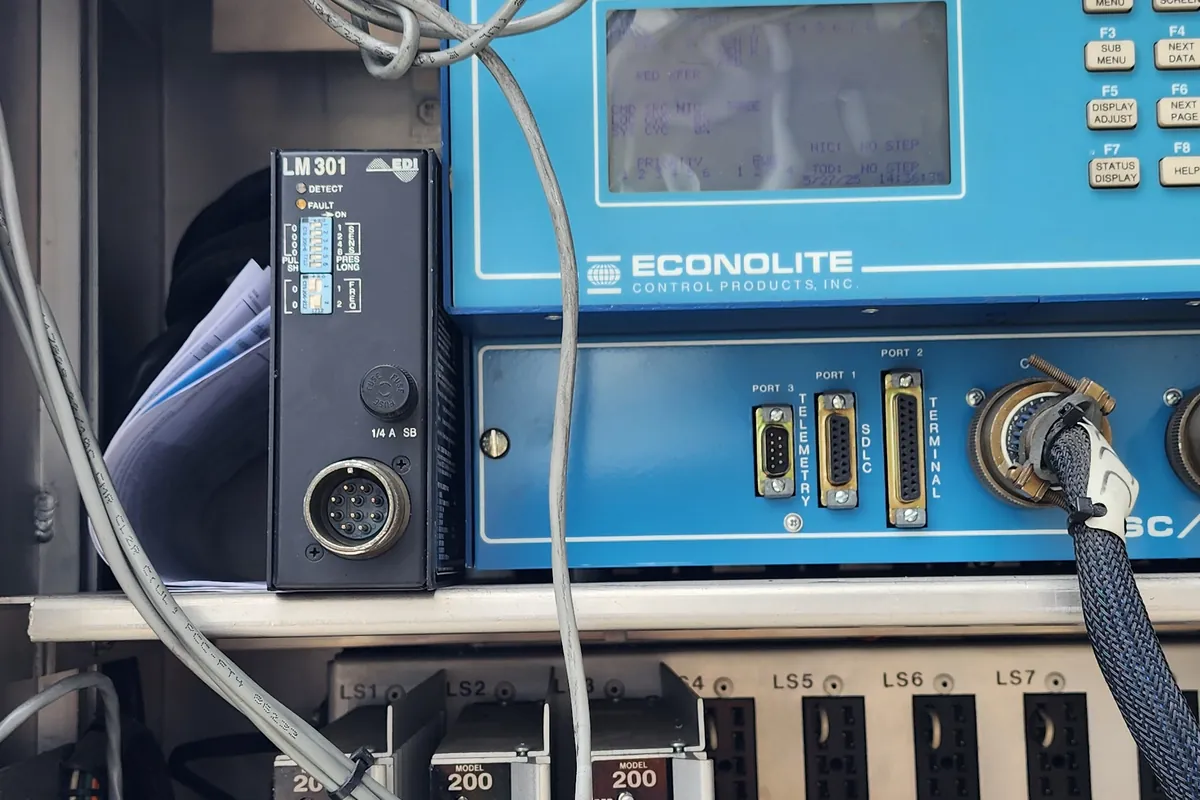
Infrared finds what is already wrong. The de energised visit is what stops the next one starting. Article 110.14 of the National Electrical Code requires terminations to be tightened to the manufacturer's specified torque using a calibrated tool, which means a torque wrench and a table, not a feel and a grunt.
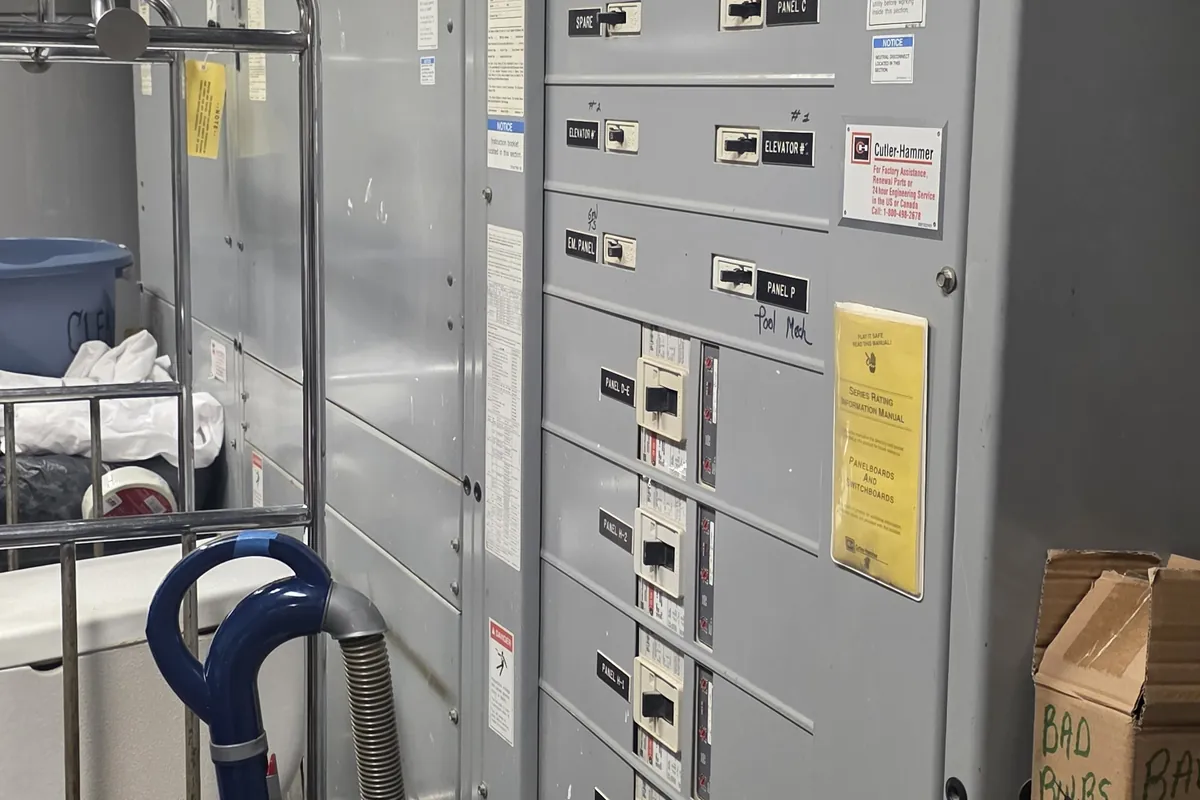
Alongside that: cleaning and inspecting bus and breakers, exercising breakers that have not moved in years, and insulation resistance testing on feeders and motor windings. Readings get written down and compared visit to visit, because the trend across three years says more than any single number. Where the gear is switchgear rather than a panelboard the scope grows, for the reasons in what switchgear is.
IEEE 43 covers the winding side, including the polarisation index, the ratio of the ten minute reading to the one minute reading, where a result above 2 is generally accepted and a falling result over years is the warning. All of it goes in the report against the equipment tag, so the next visit has something to compare with.
For decades NFPA 70B was a Recommended Practice: everybody cited it and nobody was bound by it. The 2023 edition made it a Standard, written in mandatory language. That matters for two reasons.
The first is that it now sets out what an electrical maintenance program has to contain, with maintenance intervals driven by the condition of the equipment rather than by a fixed calendar. The second is that insurers, and anyone writing a contract, now have a document they can point at when they ask what your program is.
It also connects to NFPA 70E, which assumes equipment is in a normal operating condition before certain work can be justified. Equipment that has never been maintained cannot honestly be called that, so the maintenance program and the safety program are the same conversation.
In practice the change is smaller than it sounds for anyone already doing the work, and larger than it sounds for anyone who has been relying on a habit. The difference is documentation: an equipment list, stated intervals, recorded results and evidence that findings were corrected. That is what an insurer or a contract can actually be shown.
An arc flash study is an engineering calculation, not a sticker order. It models the system from the utility transformer down: available fault current at every point, the arcing current that would actually flow, how long each protective device takes to clear it, and from those the incident energy in calories per square centimetre at a working distance. IEEE 1584 is the method.
The result is two things. A label on each piece of gear stating nominal voltage, the arc flash boundary, the incident energy or required PPE level and the shock approach boundaries, so the person opening the door knows what they are facing. And a report that often shows the settings on an upstream breaker are what makes a downstream panel dangerous, which is frequently fixable without buying anything.
NFPA 70E requires the assessment to be reviewed at least every five years, and sooner when the system changes. A study also needs a correct one line, and where one does not exist we build it, which is what the load study and drawings job covers. The work as a package is in the preventive maintenance and arc flash job.
What this covers
If what you need is not on the list, it is still worth asking. This is what we are asked for most, not the limit of what we do.
Done under load, or it is a photograph of a wall.
The visit that stops the next fault starting.
An engineering calculation, not a sticker order.
The documented version, which is what NFPA 70B now expects.
Equipment that only matters on the day it is needed.
What turns a report into something useful.
Food processing and packing plants
Light manufacturing and machine shops
Warehouses and distribution centres
Feed mills, dryers and grain sites
Poultry and dairy operations with their own service
Water and waste pumping stations
Commercial buildings with a main switchboard
01
Almost every emergency call was visible months earlier as a few degrees of extra heat. The conversation after a bad night is usually this one, and it is cheaper held before.
02
Thermographic reports are increasingly asked for, and what is wanted is specific: images, temperature rise, load at the time, equipment identified and evidence the findings were corrected. That is the format we report in.
03
Breakers that have not moved in years do not always move when you need them to, and the same is true of a standby set nobody exercises. Exercising gear is unglamorous work that turns up problems while there is still time to order parts.
04
You cannot maintain what nobody has mapped. The first visit often produces the one line and the equipment list as much as it produces findings, and everything after that is cheaper.
05
NFPA 70E expects the assessment reviewed at intervals not exceeding five years and sooner when the system changes. Most plants find their labels out of date because the plant changed and the study did not.
06
A farm main and its distribution point carry everything, often outdoors, often in corrosive air. An annual look under load costs far less than the night a lug lets go with a house full of birds.
How a job runs
From the first visit to the labels left in the panel, this is the order it happens in.
An equipment list and a one line drawing, or we produce one if there is none.
The survey scheduled for a working day, because load is what makes it meaningful.
Infrared on energised gear with covers off or through windows, with load recorded beside each image.
A separate de energised visit for torque checks, cleaning, breaker exercise and insulation testing.
A written report: images, temperature rise, load at the time, and a priority list you can hand to an insurer.
Repairs, then a retest of anything that was found hot.
A date for the next visit, set against the interval the equipment condition justifies.
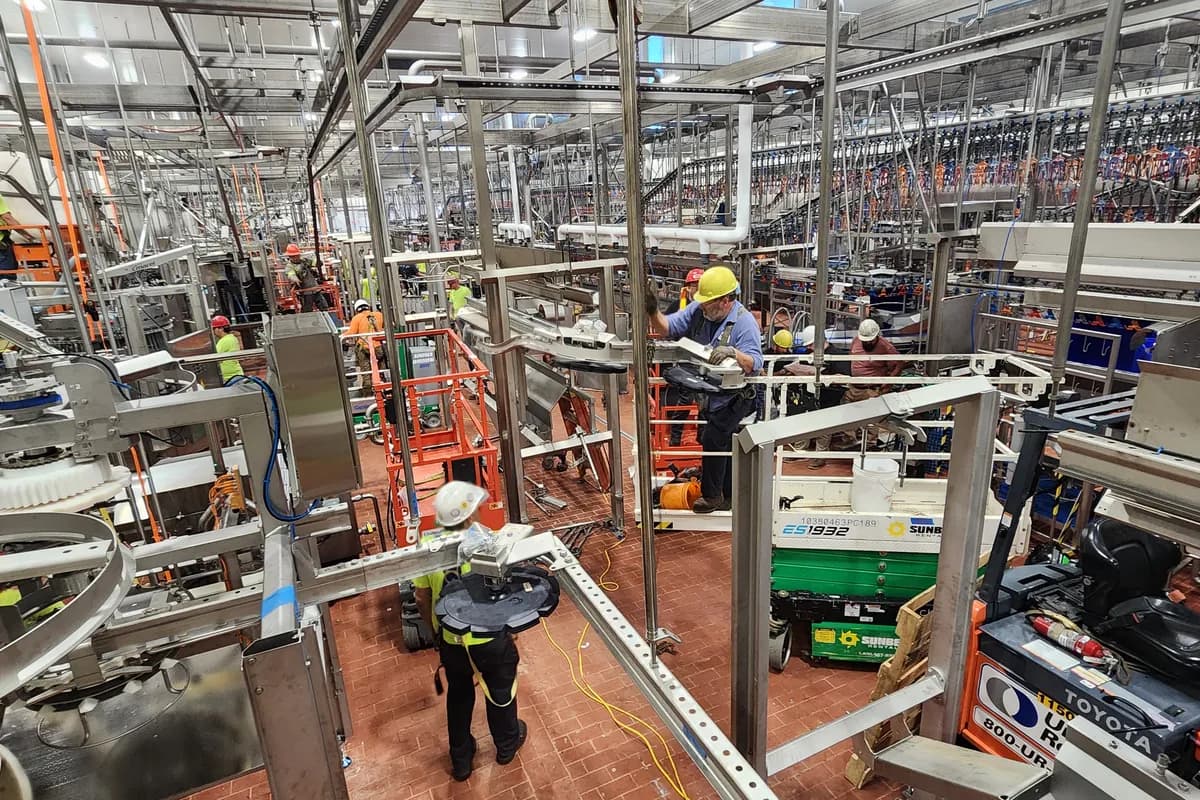
Heat at a bad connection rises with the square of the current, so a joint that will be alarming at full production barely registers when the building is idle. Scheduling the survey on a working day is half the value of it.
A few degrees over a matching phase is a note. Four to fifteen is scheduled work. Over fifteen is repaired now. Thresholds from the NETA tables are what turn a folder of orange pictures into a list somebody can act on.
Article 110.14 asks for the manufacturer's specified torque applied with a calibrated tool. A feel and a grunt is how the loose connection got there in the first place.
Insulation readings and polarisation index compared across visits tell you far more than any single measurement. A result that is falling year on year is a warning; the same number in isolation is not.
The PPE category table in NFPA 70E is allowed within its limits, and it is not an incident energy analysis. If you want real numbers on the label, that is a study, and we will say so rather than sell stickers.
A report from somebody who cannot then do the repairs leaves you managing two contractors. Most findings get corrected on the same visit or the next scheduled one, and then retested to prove it.
5.0 ★ on Google · Open 24 hours
Read first
Power distribution
The engineer says we need switchgear, not another panel. What is the difference?
Service and panels
The panel directory says kitchen and there is no kitchen. How do I fix this?
Power distribution
Where does the power actually go between the meter and the machine?
Service and panels
How do I know if the panel needs replacing or just repairing?
Standby power
What maintenance does a standby generator actually need, and how often?
Anatoly runs the crew and usually answers the phone himself. Based in Myerstown, working across Lebanon, Lancaster and Berks counties, open 24 hours.