
EMT, PVC or cable in a barn. What actually survives?
Choosing a wiring method for agricultural buildings: EMT, PVC or cable
Short answer
In the dusty and corrosive areas NEC Article 547 covers, rigid PVC with nonmetallic boxes and gasketed covers lasts longest, and it is what goes into poultry houses, farrowing rooms and washdown areas. EMT is the better job in a dry feed room, shop or machine shed, where physical damage is the risk and ammonia is not. Ordinary NM cable is not a permitted method in those areas, and while UF and NMC are listed, listed is not the same as lasting: rodents and impact take cable out long before a raceway fails. Whichever you pick, the fittings and terminations decide how long it survives.
Ask five electricians what to run in a poultry house and you get an argument about PVC moving and metal rotting, with nobody putting a number on either. The answer is not one method for the whole farm. It is a different method for each area, chosen from what that area does to hardware.
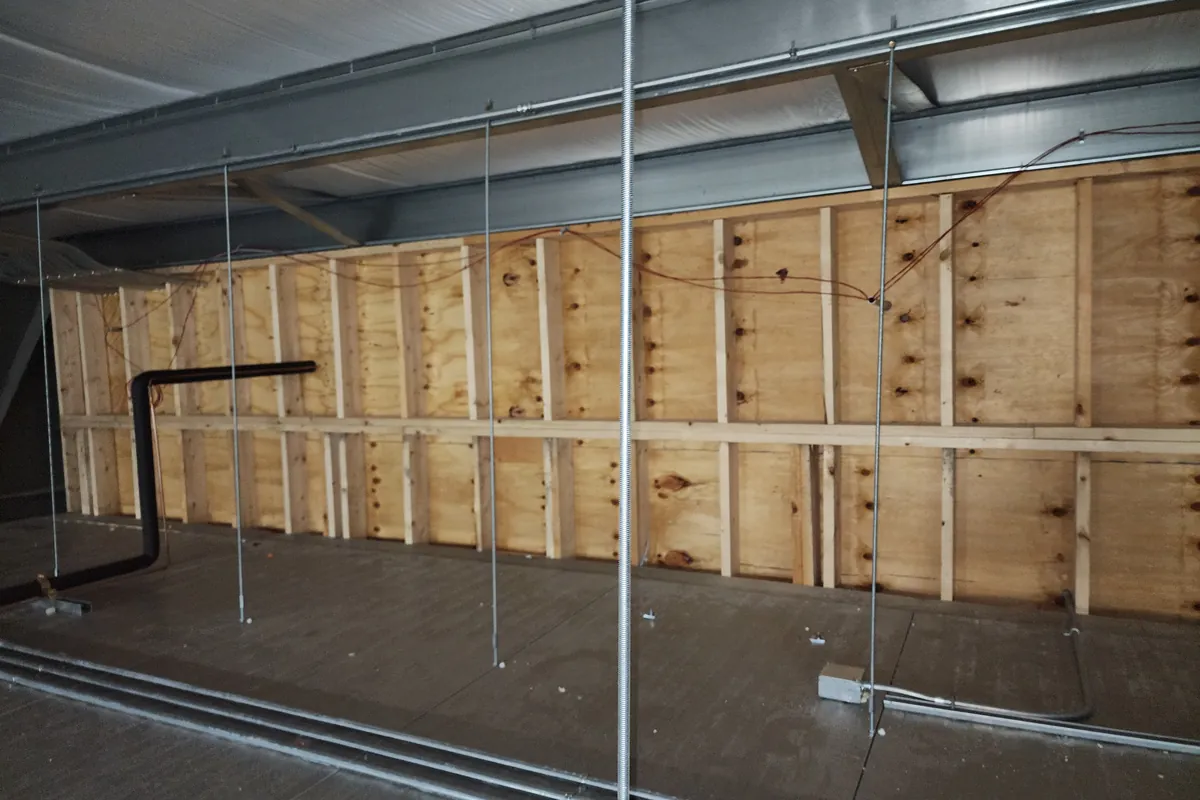
The area decides the method, not your preference
Five things in an animal building attack wiring, and they do not all attack the same room. Ammonia comes off litter and manure, dissolves in the moisture on every cold surface, and becomes a salt solution that strips zinc off galvanised steel. Hydrogen sulphide from a pit does the same to brass, faster.
Then there is water under pressure: a farrowing room or a parlour gets washed with a wand, and water goes upward into the bottom of an enclosure as readily as it runs down the front. Feed and litter dust settle everywhere and hold moisture against metal. Fans and augers shake the structure, so anything held by one screw eventually is not. And rodents are why cable fails in a barn in five years.
- Ammonia and moisture together, which is what actually eats galvanised steel
- Pressure washing, which drives water upward into enclosures
- Feed and litter dust, which holds moisture against metal
- Fan and auger vibration, which loosens straps and fittings
- Rodents, which is why cable methods fail first
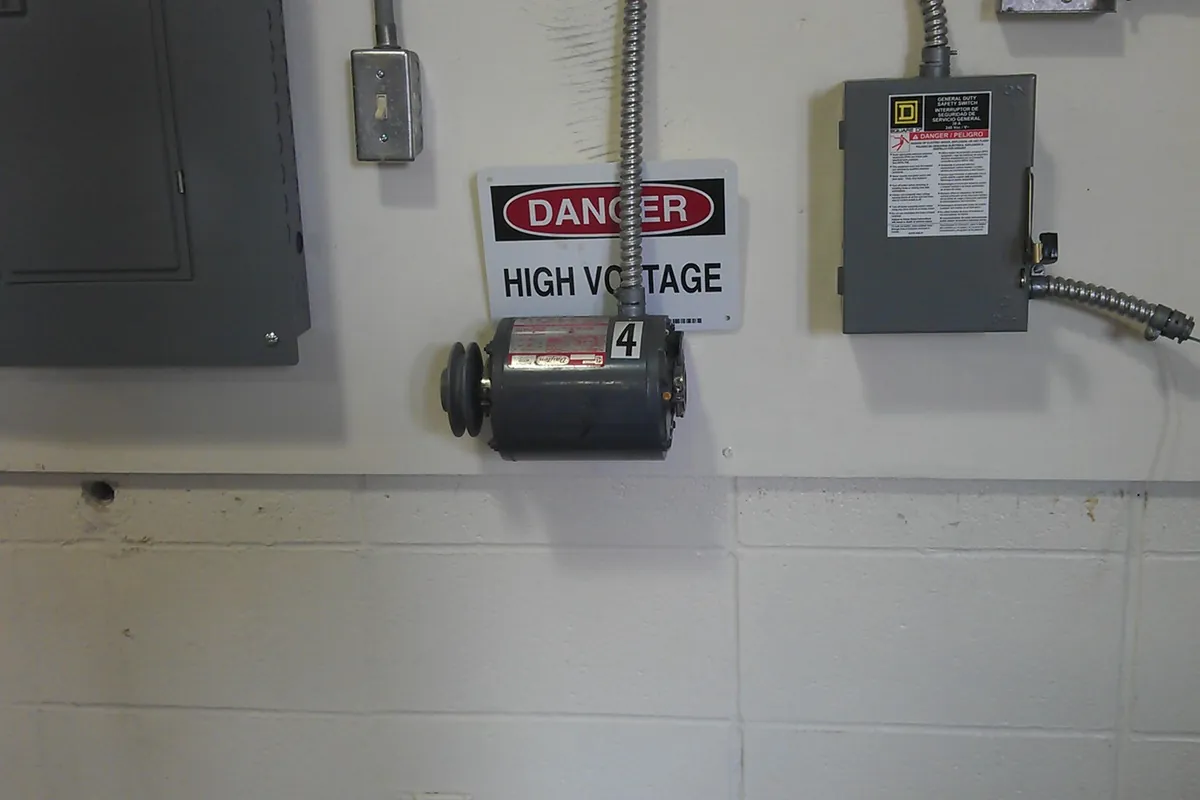
What Article 547 allows, and what it quietly does not
Article 547 does not apply to a whole farm. It covers buildings or parts of buildings where excessive dust accumulates, including poultry and livestock confinement, and buildings with a corrosive atmosphere from excrement, from corrosive particles combining with water, or from periodic washing. Your shop and office are usually outside it. Your poultry house is not.
In the areas it does cover, the wiring methods section, 547.20 in the 2023 book and 547.5(A) in older ones, lists Type UF, Type NMC, copper SE cable, jacketed Type MC cable, rigid nonmetallic conduit and liquidtight flexible nonmetallic conduit, plus other cables or raceways identified for the location. Ordinary NM, the Romex on every van in the county, is not on that list, and the Clackamas County guidance on barn and animal habitat wiring states it plainly.
The trap is reading that list as a recommendation. It is a minimum, and nothing in it protects a cable from a mouse or a skid loader. The article has also been renumbered across editions, with the equipotential plane rules moving several times, which EC&M sets out edition by edition. We cover the rest of it in our write up of 547.
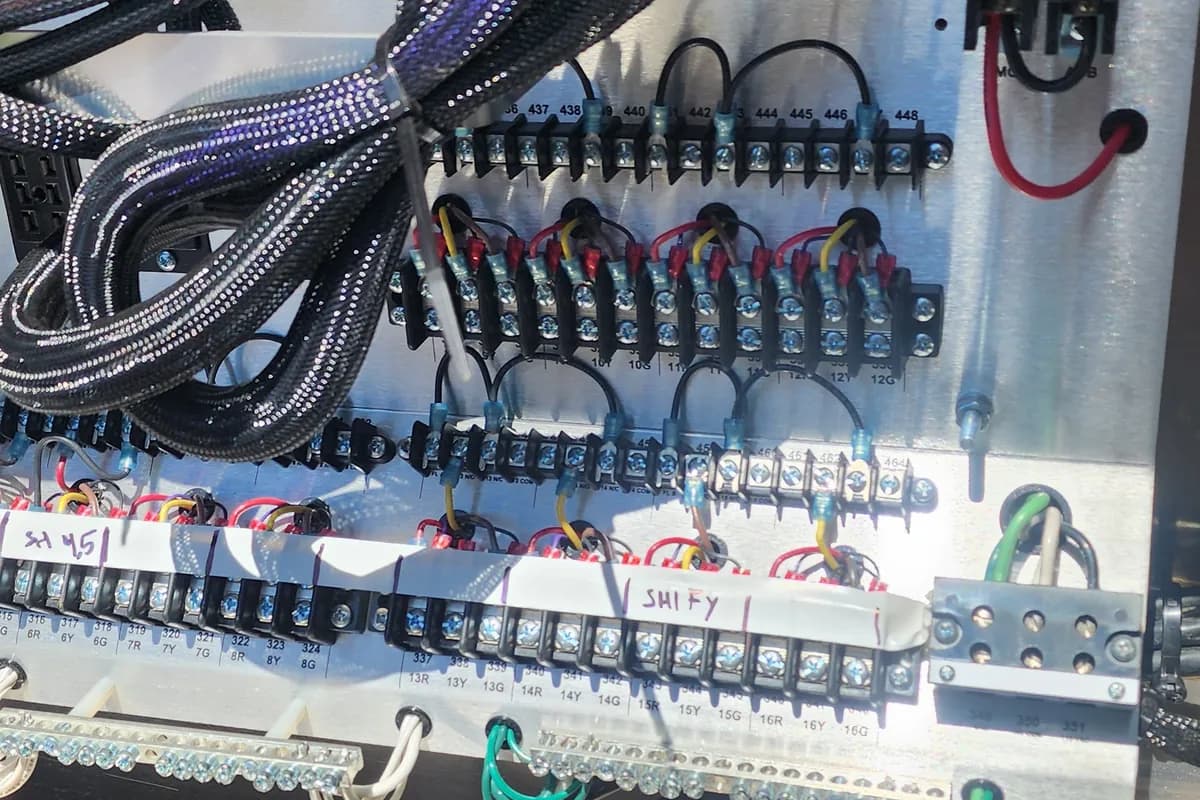
PVC against EMT, the argument that never ends
PVC does not care about ammonia, and that one fact decides most agricultural jobs. It is cheap, quick and forgiving of a farm crew drilling near it later. What it does badly is move and take a hit.
The movement is worth the arithmetic once. The coefficient of thermal expansion for rigid PVC conduit is 3.38 by ten to the minus five inches per inch per degree Fahrenheit, from Chapter 9, Table 10. Take a 100 foot run in an unheated shed that sits at zero in January and 110 under a steel roof in July: 3.38 times ten to the minus five, times 110 degrees, times 1200 inches, comes to 4.5 inches of movement. Section 352.44 wants an expansion fitting where the change reaches a quarter inch, and on that swing a quarter inch arrives at under six feet of conduit. The joints that crack first are always at a building line.
EMT is the stronger, tidier job, and in a dry feed room or a shop it is the right call. In an animal area it starts losing the moment the zinc is gone, and the tube outlives the fittings, because a die cast connector has more crevices and less coating than the conduit it joins. PVC moves and is soft, metal is rigid and rots, and in ammonia the rot arrives first.
Deciding the method area by area
- 1. Walk the building and write down what each room sees: animals, litter dust, washdown, feed dust, or none of those. Do not decide for the whole building.
- 2. Animal areas, litter and anything downwind of manure: rigid PVC, Schedule 40 minimum, nonmetallic boxes, gasketed covers, nothing galvanised in the air path.
- 3. Washdown rooms, parlours and food rooms: the same, plus Schedule 80 or a steel sleeve below eight feet where a wand, a gate or a hoof reaches.
- 4. Feed rooms and grain handling, dust but no ammonia: either works. Take EMT for strength, with compression fittings, never set screw.
- 5. Shop, machine shed, office and mechanical room, outside the 547 areas: EMT, or rigid metal where vehicles move.
- 6. Exterior, buried and yard pole runs: PVC below grade, PVC or rigid metal above, stainless or hot dip hardware at every strap.
- 7. Last and most important: buy enclosures and fittings for the same environment as the raceway. A die cast fitting in a poultry house never reaches year five.
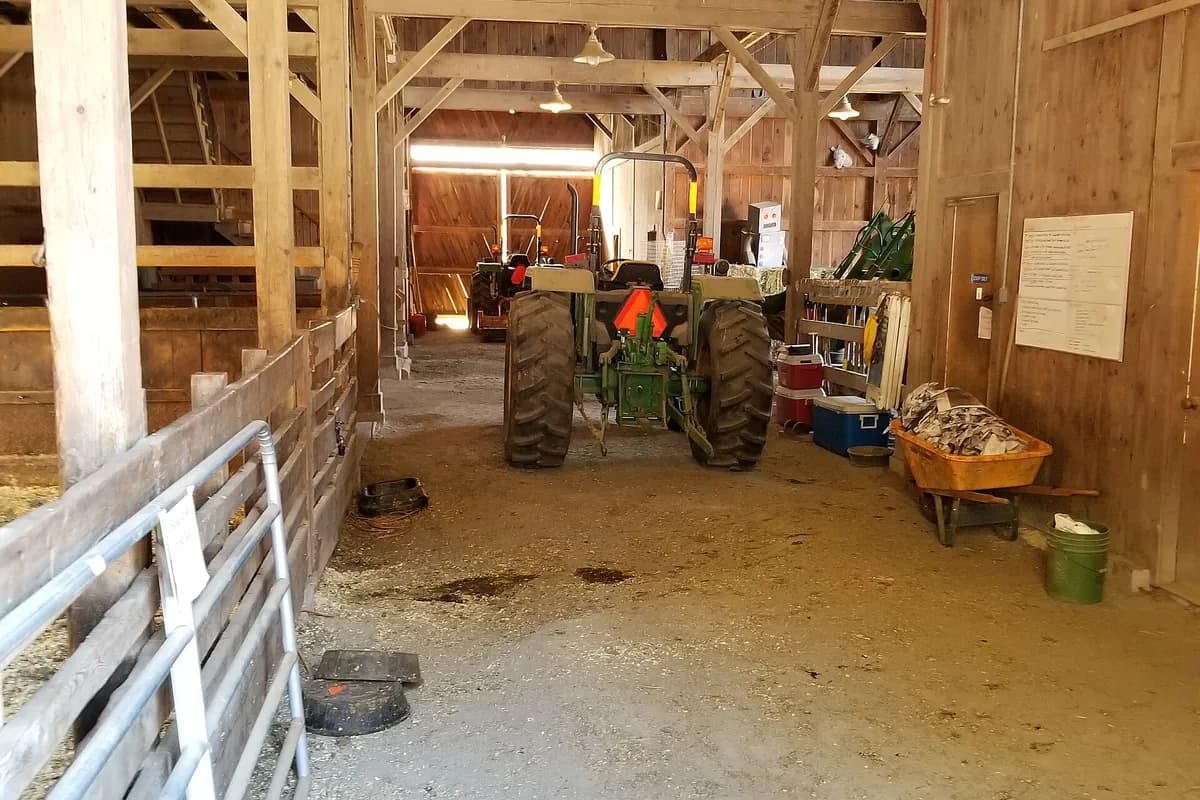
The fittings and boxes are what actually fail
Article 547 asks that enclosures, boxes and fittings in dusty areas be designed to minimise dust entry, with no openings such as unused mounting holes. In damp and wet locations it asks that they be placed or equipped so moisture cannot enter or accumulate. Both rules exist because the enclosure is the weak point, not the conduit.
A blank cover with no gasket fills with dust in one growing cycle. A PVC system landed in a knockout with a locknut instead of a threaded hub leaks at exactly that point. A run leaving a heated room into a cold attic condenses inside, and the water collects in a box at working height.
Terminations finish it off. Strands wick moisture, corrode under the lug, resistance climbs, the joint heats, and it lets go on the coldest night of the year with every fan and heater running. That is the failure we rebuilt around in the poultry house ventilation power job.
Supports and spacing, which everybody gets wrong
Table 352.30(B) gives maximum support spacing for rigid PVC of three feet up to one inch, five feet for one and a quarter through two inch, and six feet above that, with a support within three feet of every box. EMT under 358.30 wants a support within three feet of each termination, then every ten feet.
Those are minimums written for a still building, and a tunnel ventilated poultry house is not still. A strap at the code maximum works loose while one at half that spacing does not. Use strut rather than individual straps on runs over about twenty feet, and stainless or hot dip hardware, because a plated screw in an animal area is a two year fastener.
Do not fasten a raceway to a curtain track or a feed line hanger: anything that moves independently of the wall pulls the fitting apart. And keep the run out of the scrape path, which is part of why lighting feeds get routed the way they do in the free stall barn lighting job.
What ten years actually looks like
NM cable in an animal area does not last a decade: the jacket hardens and cracks, mice take the rest, and the splices sit in a box full of dust. UF stapled to a purlin gets five to eight good years, then fails mechanically rather than electrically, to a gate, a loader, a hoof or a rodent. It rarely trips anything, which is the dangerous part.
EMT in a poultry house weeps rust at the couplings by year three or four. Set screws seize, and around year eight the conduit parts at a coupling. The conductors still work, so nobody notices that the metal raceway, very often also the equipment grounding path, is no longer continuous.
PVC with expansion fittings, proper support, threaded hubs and gasketed enclosures is still serviceable at twenty years. Without them it cracks at the joints in the first hard winter. The method is a small part of the outcome and the details are the rest, which is how we approach agricultural electrical work, and why a bare shell gets wired differently from an existing building, as in the pole barn fit out.
Questions people ask
- Can I just run UF cable to save money? The code lists it.
- You can, and it will pass where 547 permits it. It will also fail first, because nothing in that listing protects it from a rodent or a loader bucket. Fewer, better planned circuits in PVC is the better saving.
- Is EMT ever acceptable in a poultry house?
- It is not prohibited outright, but it is a poor choice in the litter and ventilation areas, because ammonia and moisture strip the zinc and take the fittings before the tube. Where metal is genuinely wanted in a corrosive area, PVC coated rigid holds up.
- Do I really need expansion fittings on a hundred foot run?
- In an unheated building, yes. The numbers above give roughly four and a half inches of movement over a normal Pennsylvania year. Without a fitting, the joints and boxes absorb it, and they crack.
- What about liquidtight flexible conduit to a fan or an auger?
- Liquidtight flexible nonmetallic conduit is listed in 547 areas and is the right way to connect anything that vibrates or comes off for service. Keep it short, support it, and use fittings from the same maker.
- Our building was wired twenty years ago. Does it all have to come out?
- Usually not. Work that was compliant when installed generally stays unless it is damaged or the area is being altered. What is worth doing is a walk through that finds the parts actually degrading, normally enclosures and terminations.
Sources worth reading
- Clackamas County: Electrical Wiring for Barns, Riding Arenas, Animal Habitat and Feed Storage
Building department guidance on what NEC 547 permits in animal, habitat and feed storage areas.
- EC&M: Keeping Up with Changes in NEC Article 547
How the agricultural article and its equipotential plane rules changed across code editions.
What we do about it
Who wrote this
Most of the agricultural work we do across Lebanon, Lancaster and Berks counties happens in buildings that are already running, so the method has to survive the environment without a shutdown to correct it later. If you are wiring a new house or replacing something that has rotted out, the decision is worth twenty minutes of planning before anyone buys pipe.
Slon Electric is a family run electrical contractor in Myerstown, Lebanon County. Anatoly runs the crew and usually answers the phone himself. We work on farms, in plants and in commercial buildings across Lebanon, Lancaster and Berks counties, we are rated 5.0 on Google, and the phone is covered around the clock.