
What does the code actually require in a barn that it does not require in a shop?
NEC Article 547 in plain language: what changes once animals or dust are in the building
Short answer
Article 547 covers the parts of a building where livestock are housed or where dust and a corrosive atmosphere are normal, and in those areas it tightens three things: what you may run the wiring in, how enclosures and fittings have to be sealed against dust and washdown, and whether an equipotential plane is required in the concrete where animals stand. A farm shop with a dry floor and no animals in it gets wired like any other shop. The line is not drawn by the deed or the address, it is drawn by what actually happens in that part of the building. Getting it wrong is costly because the correction is a rewire rather than a repair.
Article 547 is a short article, but it decides whether a building gets wired like a garage or like a wash bay in a chemical plant. Most of the argument we run into on farm jobs is not about the rules themselves. It is about which rooms they apply to, because half the buildings around here are part barn and part shop.
What actually puts an area under 547
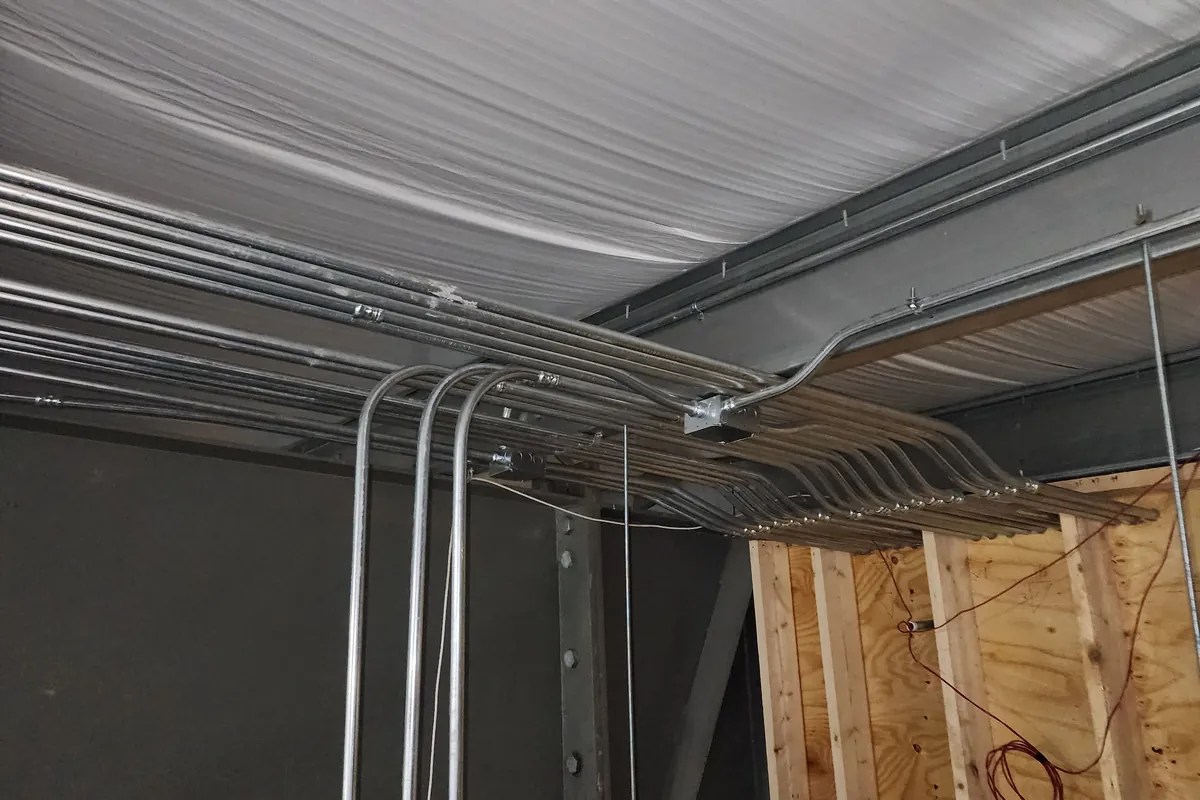
The scope has two halves, and an area only has to meet one of them. The first is excessive dust, including dust with water present: poultry houses, livestock housing, and anywhere feed is ground, augered or handled. The second is a corrosive atmosphere, which the article describes in terms any farmer will recognize. Poultry and animal excrement, corrosive particles from feed and bedding, and areas kept damp and humid by periodic washing and sanitizing.
Two things follow from that wording. It applies to areas rather than to buildings, so one structure can have rooms in scope and rooms out of it. And it does not care whether the property is zoned agricultural. A dry hay storage barn with nothing living in it can fall outside the article entirely, while a corner of a machine shed where feed gets mixed falls inside it.
Ammonia is what makes this real rather than theoretical. In a tunnel ventilated house it gets into every threaded joint, every screw and every terminal, and it keeps working on them for years. We size and mount gear in poultry house power and ventilation work with that in mind, because the atmosphere, not the load, is what shortens the life of the installation.
The wiring methods list, and why the letters matter
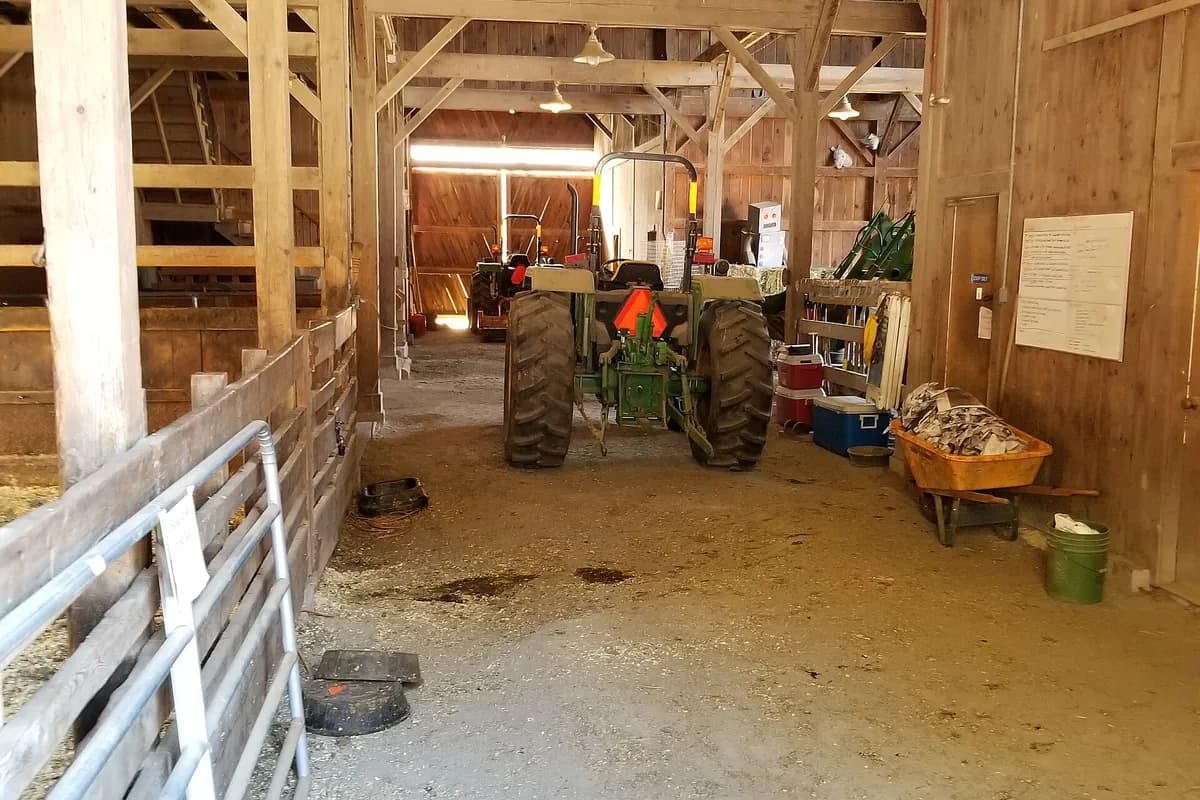
The permitted wiring methods in Article 547 make a short list and it repays reading letter by letter. Types UF and NMC are on it, along with copper Type SE cable, jacketed Type MC, rigid nonmetallic conduit, liquidtight flexible nonmetallic conduit, and other cables or raceways suitable for the location used with approved termination fittings.
Plain Type NM, the cable stapled across the ceiling of every shop in the county, is not on that list. NMC is a different product with a corrosion resistant and fungus resistant jacket, and it is not what is on the van. That single letter is behind a good share of the failed inspections we hear about, and it is worth knowing before the drywall goes up.
Being permitted and being a good idea are different questions. UF is legal in these areas and we still run very little of it where animals live, because cable gets chewed, dragged on by a scraper and pressure washed, and because a cable cannot be repulled when it fails. Conduit with fittings rated for the location survives washdown and leaves you a path to pull a new conductor in ten years. The trade offs between PVC, coated steel and cable are set out in the piece on barn wiring methods.
Boxes, fittings and motors: the parts that fail first
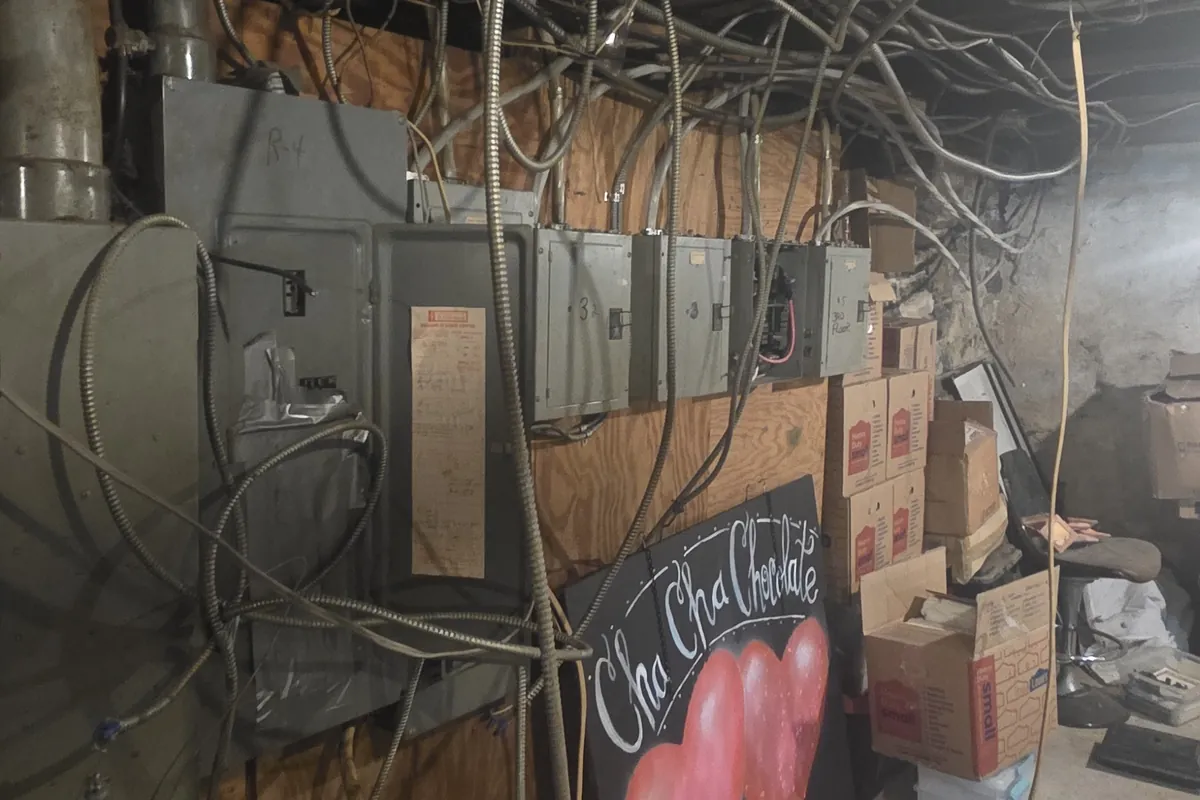
The wiring method is only half of it. Article 547 also requires enclosures, boxes, conduit bodies and fittings to keep out dust and moisture, to be weatherproof where wet cleaning methods are used, and to be made of corrosion resistant material where corrosion is a concern. Cables have to be secured within 8 inches of every cabinet, box or fitting, which is tighter than the general rule and exists because vibration and pulling are constant in these buildings.
Motors have to be totally enclosed or otherwise built to keep dust, moisture and corrosive particles out, and luminaires have to suit the location, be watertight where washdown happens and be guarded where equipment or animals can hit them. The 2020 code also widened GFCI protection for receptacles in agricultural buildings, which catches a lot of older installations at the first alteration.
EC&M's review of how Article 547 has changed is a useful read on this, because the article has been reworked in most code cycles since it appeared in 1978 and a lot of what people remember is two editions out of date.
The equipotential plane, and why it is not optional
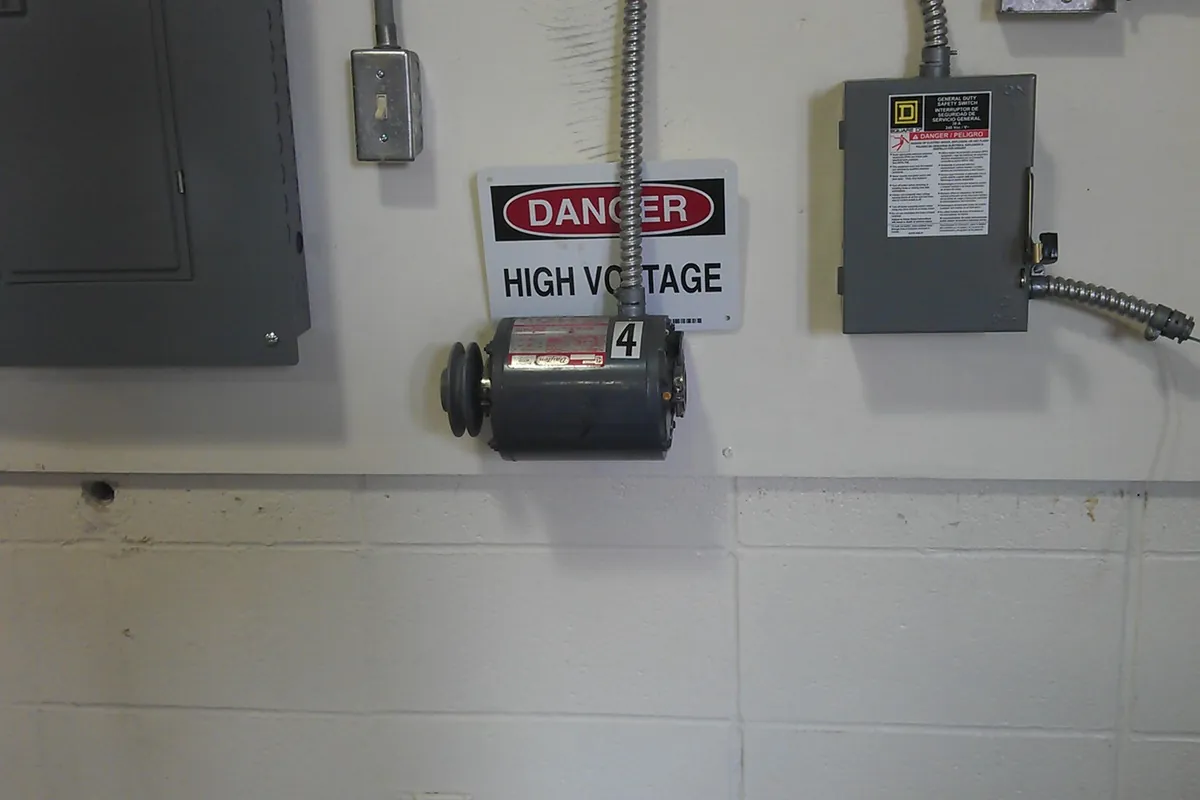
This is the requirement with no equivalent anywhere in a shop, and it exists for one reason: a cow standing on wet concrete with her nose on a steel waterer is a far better conductor than a person in boots. A fraction of a volt between the floor and the metal is enough to change her behavior.
The plane solves that by removing the difference. Everything conductive in the area, including the steel in the slab, gets tied together and bonded to the grounding electrode system, so the animal cannot find two points at different potential. It is not a fault clearing device and it is not a substitute for finding a fault. What it does is stop the small voltages that are always present from showing up across an animal, which is why it sits at the center of any serious stray voltage investigation.
If you are specifying this rather than reading about it, up.codes carries the equipotential plane and bonding text in a readable form. The detail that catches people is the extent: the plane has to cover where the animals actually stand, which usually means it is decided at the concrete stage rather than at the wiring stage.
Building an equipotential plane that will pass
- Establish where it is required: concrete confinement areas where livestock stand and can touch metal equipment likely to become energized, and the outdoor concrete where they stand at that same equipment. The 2023 code numbers this 547.44. Earlier editions number it 547.10.
- Note that poultry is excluded from the definition of livestock for this requirement, so a broiler house floor is a different conversation from a free stall alley.
- Build the plane by one of the accepted methods: structural reinforcing steel tied together with steel tie wires, welded wire mesh tied and fully embedded in the surface material, or a grid of bare solid 8 AWG copper on a 12 inch by 12 inch spacing.
- Bond the plane to the grounding electrode system with solid copper no smaller than 8 AWG, insulated, covered or bare.
- Make every connection with pressure connectors or clamps of brass, copper or copper alloy. Nothing that will corrode away inside a slab.
- Tie in everything the animal can touch at the same time: stall steel, waterers, headlocks, feed rail, crowd gate frame.
- Do all of it before the pour. Retrofitting a plane into a finished floor means a concrete saw and a bad week.
Barn or shop: where the line falls in a real building
A pole building with a heifer pen at one end, a feed room in the middle and a workbench at the other end is the normal case, not the awkward exception. The article applies area by area, so the pen and the feed room are in scope and the bench end may not be.
In practice the cheapest way to handle it is to draw the line on paper before anybody buys material, agree it with the inspector, and then wire each side to its own standard. Trying to split the difference with one method throughout usually means either paying for corrosion resistant work in a dry room or, far worse, discovering that the feed room was wired like an office.
Where the line is genuinely unclear, wire to the stricter standard. The cost difference on a new building is modest and it removes the argument. That is the approach we take on agricultural work generally, because farm buildings get repurposed and this year's dry storage is next year's calf housing.
- Scope is decided by what happens in the area, not by what the building is called.
- One building can hold areas in scope and areas out of it, and the boundary should be on the drawing.
- When the use is likely to change, wire to the stricter standard now.
What it costs to get this wrong
The failure mode is slow and it is predictable. Ammonia and moisture get into terminations first. Resistance at a loose or corroded connection climbs, that connection heats, the heat accelerates the corrosion, and eight or ten years later a lighting circuit drops out on the coldest night of the winter or a fan quits in a July heat wave with a house full of birds in it.
The bill at that point is not a repair. Cable that cannot be repulled means opening ceilings and walls, and doing it in an occupied building means working around animals, which slows everything down. A rewire in a running barn routinely costs several times what the correct method would have cost at construction, and that is before anything is lost in the meantime.
There is an insurance side too. After a barn fire the origin gets investigated, and wiring that did not meet the article that governs that building is not a conversation any farm wants to have. When we relit a free stall barn, described in the free stall lighting project, replacing the wiring method was most of the work and the fixtures were the easy part.
Questions people ask
- Does Article 547 apply to my whole farm?
- No. It applies to the areas that meet its scope, which means livestock housing and areas with excessive dust or a corrosive atmosphere. An office, a dry equipment shed or a separate shop building can sit entirely outside it and be wired to the ordinary rules.
- Is a horse barn covered?
- Usually the stall and wash areas are, because horses are livestock, bedding and feed produce dust, and wash bays keep the area damp. A tack room or an attached office often is not. It is worth settling with the inspector before material is ordered rather than after.
- Do I need an equipotential plane in a poultry house?
- Not for that requirement, because poultry is excluded from the definition of livestock used for equipotential planes. Bonding everything conductive together is still good practice in a house full of steel, water lines and wet litter, and it costs very little at construction.
- The barn was wired with Romex thirty years ago. Must I rewire it?
- Existing installations are generally not required to be brought up to the current code unless the work is altered or extended. The real question is condition rather than compliance. If the jacket is chewed, the terminations are green and the panel is corroded, the code is the least of it.
- Can I run EMT in a livestock building?
- It is not prohibited outright, but plain steel EMT in a washdown or high ammonia area will corrode at the couplings and connectors in a few years. PVC, corrosion resistant raceway or coated steel with matching fittings is the normal answer in the wet end, with EMT kept for dry areas.
Sources worth reading
- EC&M: Keeping Up with Changes in NEC Article 547
How the scope, the wiring methods and the equipotential plane rules have moved across code cycles.
- Equipotential Planes and Bonding of Equipotential Planes, NEC 547.44
The code text for where a plane is required, how it may be built and how it must be bonded.
What we do about it
Who wrote this
We wire new agricultural buildings and re-wire old ones across Lebanon, Lancaster and Berks counties, which means the scope question and the equipotential plane come up most weeks rather than once a year. If you are planning a building and the line between the animal end and the shop end has not been drawn yet, that is the drawing to get right first.
Slon Electric is a family run electrical contractor in Myerstown, Lebanon County. Anatoly runs the crew and usually answers the phone himself. We work on farms, in plants and in commercial buildings across Lebanon, Lancaster and Berks counties, we are rated 5.0 on Google, and the phone is covered around the clock.